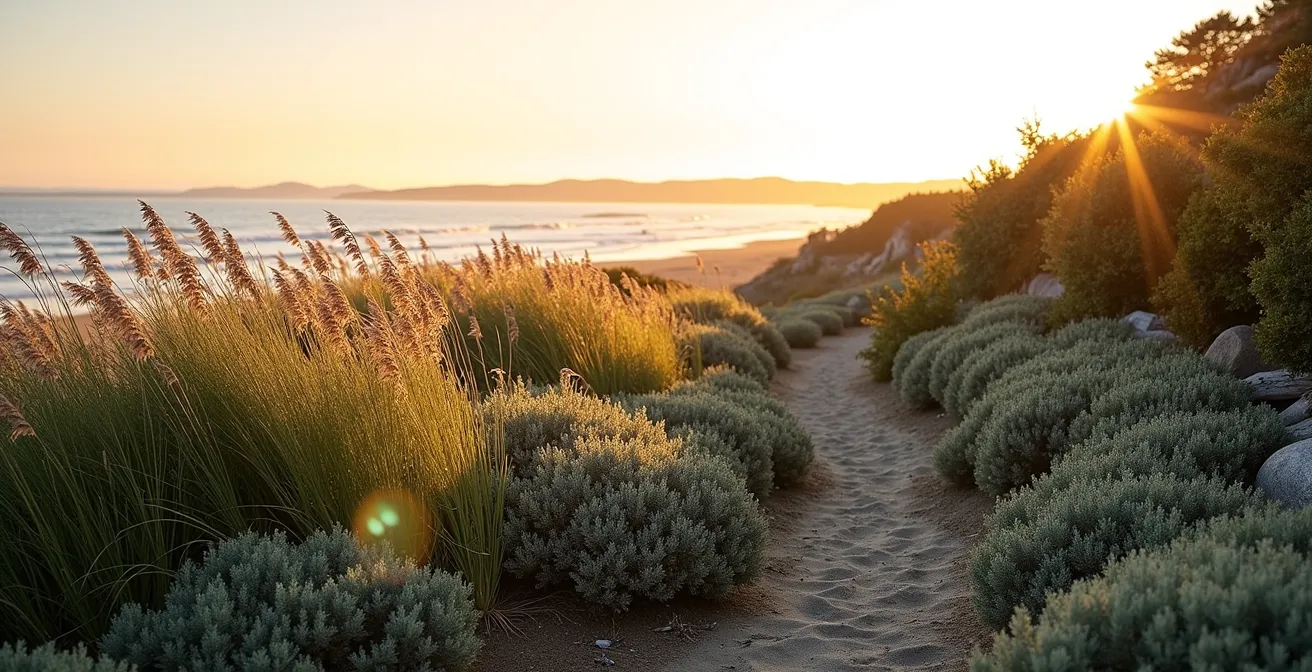
Most coastal gardening advice offers a simple list of ‘tough’ plants, yet they still fail. The real secret is to stop fighting the coast and start thinking like a plant. As a botanist, I’ll show you that a resilient garden isn’t built on invincible shrubs, but on understanding the specific stresses—like salt on leaves versus salt in soil—and using layered, permeable designs to create a low-maintenance ecosystem that works with nature, not against it.
There’s a unique frustration that comes with coastal gardening. It’s the feeling of pulling out another brown, crispy shrub, its leaves scorched by salt and its branches snapped by the wind. You’ve spent the money, put in the effort, and followed the common advice. You’ve consulted the lists of “salt-tolerant” plants and chosen the ones labelled “deer-resistant” at the nursery, yet the coast always seems to win. It feels like a constant, expensive battle against an unrelenting opponent.
But what if the goal isn’t to find an invincible plant, but to create a smart, resilient system? As a botanist specializing in plant stress physiology, I can tell you that long-term success on the coast lies not in brute force, but in ecological strategy. It’s about understanding the specific challenges of your site—from foliar salt spray to soil salinity and wind desiccation—and making strategic choices to mitigate them. It’s about creating a layered defense that protects your garden, rather than expecting a single plant to stand alone against the storm.
This guide will shift your perspective from simply choosing plants to designing a cohesive, low-maintenance ecosystem. We will explore how to manage combined pressures like deer and salt, create privacy that works with the wind instead of fighting it, amend impossible coastal soils, and maintain it all in about an hour a week. It’s time to stop replacing dead plants and start building a garden that truly thrives.
To navigate this strategic approach to coastal gardening, this article breaks down the core challenges and solutions. The following summary outlines the key areas we will cover, from dealing with specific microclimates to creating an efficient maintenance schedule.
Summary: Beyond Toughness: How to Select Coastal Plants That Truly Thrive in Salt and Wind
- Hostas or Ferns: Which Adapted Plant Thrives in Dry Shade Under Trees?
- Why “Deer Resistant” Plants Get Eaten and What to Plant Instead?
- Which Trees Best Tolerate Exhaust Fumes and Road Salt?
- The Groundcover Mistake That Takes Over Your Lawn in One Season
- Fast vs Slow Growers: Which Should You Plant for Instant Privacy?
- Native Oak or Exotic Maple: Which Survives Better in Changing Climates?
- How to Fluff Up Clay Soil to Improve Drainage for Root Vegetables?
- How to Schedule Regular Groundskeeping to Spend Only 1 Hour a Week?
Hostas or Ferns: Which Adapted Plant Thrives in Dry Shade Under Trees?
The question of what to plant in the dry shade under a mature tree is a classic gardening puzzle. In a coastal environment, it becomes a master-level challenge. The tree’s roots outcompete other plants for water, the canopy blocks light and rain, and the ever-present salt spray adds another layer of physiological stress. While many gardeners default to Hostas or common ferns, these often fail in a coastal setting due to their low tolerance for salt and drought. The key is to look for plants adapted to this specific, harsh ecological niche.
Finding salt-tolerant plants for shade is particularly difficult. While many grasses handle salt well, most fail in shaded conditions. However, botanical studies show a few champions exist for these tough spots. Plants like Kinnikinnick (Arctostaphylos uva-ursi), an evergreen groundcover, and certain sedges can handle the combination of part shade and salt. For a fern-like texture, the Hart’s Tongue Fern (Asplenium scolopendrium) is known for its tolerance to the limey, alkaline soils often found near coastal bluffs, a trait that makes it more resilient than its acid-loving cousins.
Instead of forcing a typical shade garden plant to endure coastal conditions, the solution is to seek out species that naturally thrive in similar environments. Consider Perennial saltmarsh aster (Symphyotrichum tenuifolium) or Carolina sealavender (Limonium carolinianum) if you have partial sun. These plants are physiologically equipped to handle the osmotic stress from salt, giving them a significant advantage over traditional choices. The goal is to match the plant to the niche, not to fight the environment.
Why “Deer Resistant” Plants Get Eaten and What to Plant Instead?
The “deer resistant” label on a plant tag is a promise, not a guarantee—especially in a coastal garden. When natural food sources are scarce, hungry deer will eat almost anything, including plants they would normally avoid. This pressure, combined with the stress of salt and wind, means coastal gardeners must think in terms of a layered defense rather than relying on a single plant’s reputation. Your strategy should involve multiple deterrents: texture, aroma, and strategic placement.
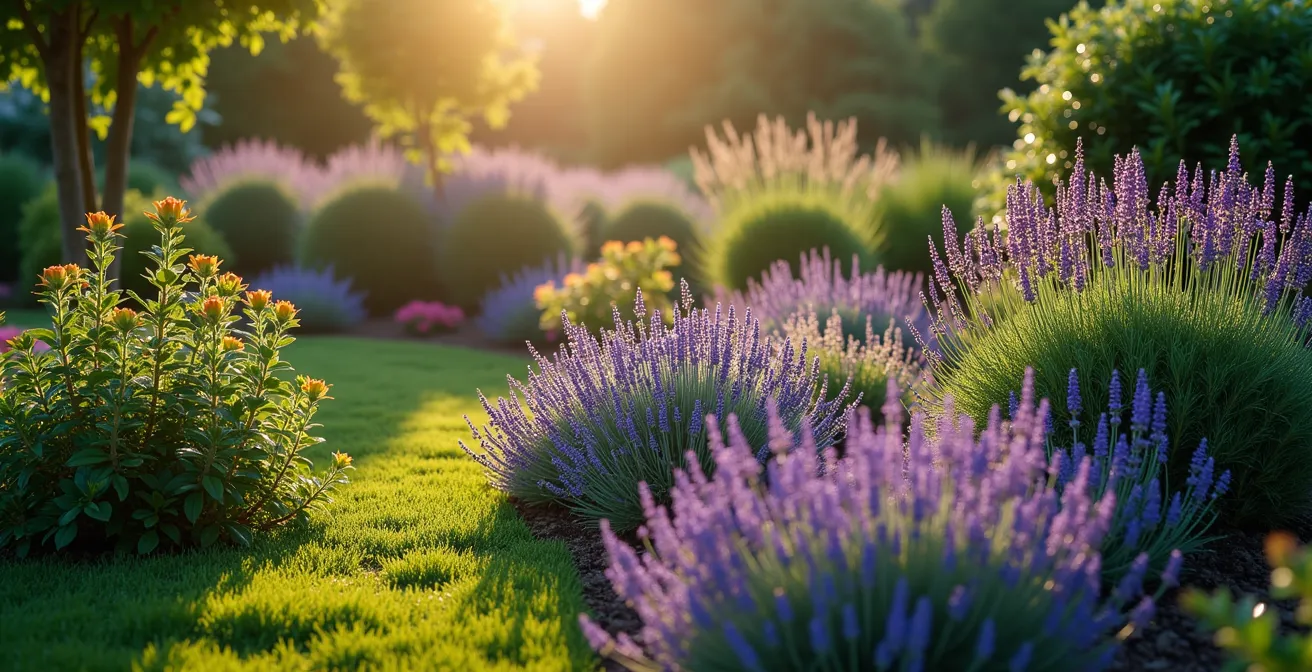
The most effective deer-resistant coastal plants often have strong physical or chemical defenses. Thorny plants like Rugosa Roses, spiny ones like Sea Holly (Eryngium maritimum), or highly aromatic species like Russian Sage and Lavender make excellent choices. Deer are browsing animals and tend to avoid plants that are difficult or unpleasant to eat. A plant like the Mugo Pine demonstrates excellent value, as horticultural experts note it exhibits both high deer resistance and salt tolerance. By creating a border of these less-palatable plants, you create a defensive barrier that protects more vulnerable specimens deeper in the garden.
The true art of coastal defense lies in choosing plants that solve multiple problems at once. The following table illustrates plants that pull double duty, providing resilience against both salt exposure and deer pressure.
This matrix highlights plants that offer high value in a challenging coastal environment. As shown in an analysis of multi-stressor resilient plants, selecting species like Yaupon Holly gives you a trifecta of benefits: salt tolerance, deer resistance, and food for wildlife.
| Plant | Salt Tolerance | Deer Resistance | Additional Benefits |
|---|---|---|---|
| Yaupon Holly | High | High | Drought tolerant, red berries for birds |
| American Beautyberry | Moderate | High | Purple berries, drought-tolerant |
| Rugosa Roses | High | Moderate (thorny) | Fragrant flowers, large rose hips |
| Sea Holly | High | High (spiny) | Blue flowers, architectural form |
| Russian Sage | Moderate | High (aromatic) | Long blooming, drought tolerant |
Which Trees Best Tolerate Exhaust Fumes and Road Salt?
For gardeners near coastal roads, the assault is twofold: salt from the ocean and a different, often more damaging, salt from winter de-icing operations. It’s crucial to distinguish between foliar salt (spray on leaves) and soil salinity (salt buildup in the ground). Many trees that tolerate sea spray cannot handle having their roots sit in salty soil. This “double jeopardy” zone requires trees that are exceptionally tough and adapted to urban and roadside stress.
The salt challenge in inland areas isn’t from ocean spray: it’s from road salt buildup during winter de-icing operations. This road salt can be equally damaging to plants as coastal salt spray.
– Nature Hills Nursery Experts, Top 10 Most Salt-Tolerant Plants Guide
This insight is critical. Road salt (sodium chloride) accumulates in the soil, creating a chronic condition of high salinity. It disrupts a plant’s ability to absorb water, a condition known as physiological drought, where the plant can wilt even in moist soil. It also leads to chloride toxicity, which manifests as burnt leaf margins. Trees planted in parkways or along driveways need to be tolerant of this specific type of soil contamination as well as airborne pollutants.
Fortunately, a few species have proven their mettle in these harsh conditions. These trees are often chosen for urban street plantings precisely because of their resilience to pollution, compacted soil, and salt. When selecting a tree for a roadside coastal property, prioritizing these proven urban warriors is a sound strategy.
- Japanese Black Pine (Pinus thunbergii): Often considered the gold standard for coastal planting, it handles both sea spray and high soil salinity with exceptional grace.
- London Plane Tree (Platanus x acerifolia): A classic urban tree, it is remarkably tolerant of pollution, compacted soils, and both road and sea salt.
- Honeylocust (Gleditsia triacanthos): This fast-growing, adaptable tree is highly resistant to de-icing salts and offers filtered shade, allowing grass to grow underneath.
- Norway Spruce and Colorado Blue Spruce: In colder coastal climates where road salt is heavily used, these evergreens provide a robust, year-round screen.
The Groundcover Mistake That Takes Over Your Lawn in One Season
The dream of a lush, green lawn meets a harsh reality at the coast. Traditional turfgrass struggles with sandy, free-draining soil, high pH, and a constant barrage of salt mist. The common mistake is to fight these conditions with endless fertilizer and water. A bigger mistake is planting an aggressive, non-native groundcover that seems like an easy solution but quickly becomes an invasive nightmare, escaping its designated area and choking out other plants.
The strategic alternative is to work with the coastal environment by choosing a groundcover that is adapted to it. Instead of a lawn, consider creating controlled, managed zones of native or well-behaved grasses. Beach Grass (Ammophila breviligulata) is a prime example. It is the perfect plant for anchoring sandy areas and dunes, providing a natural erosion control solution. Its entire physiology is designed to thrive in sandy, low-nutrient, windswept conditions, making it a low-maintenance and highly effective choice for stabilizing soil.
A key mechanism for survival in coastal soils is natural salt leaching. The sandy texture that makes it hard for many plants to thrive is an advantage here, as it allows salt to be washed away. However, this process requires sufficient fresh water. It is estimated that a minimum of 20 inches of rainfall annually is required in well-drained soil to naturally remove excess sodium chloride from the root zone. In areas with less rainfall, supplemental deep watering or choosing even more salt-tolerant groundcovers becomes critical.
By replacing a high-maintenance lawn with strategic plantings of native grasses or other salt-tolerant perennials like trailing Juniper or Bearberry (Kinnikinnick), you reduce maintenance and create a more resilient, ecologically sound landscape. You are swapping a constant battle for a self-sustaining system.
Fast vs Slow Growers: Which Should You Plant for Instant Privacy?
The desire for “instant privacy” often leads coastal homeowners to plant a monolithic wall of fast-growing trees like Leyland Cypress. This approach is often a mistake. A solid wall of vegetation doesn’t stop the wind; it creates intense turbulence on the leeward side, causing more damage than the wind itself. Furthermore, many fast-growing species have weak wood and shallow roots, making them prone to failure in coastal storms. The botanically sound approach is to create a permeable screen using a mix of fast and slow-growing plants.

A permeable screen, with about 40-60% porosity, filters and slows the wind rather than blocking it. This reduces its force and minimizes damaging turbulence. The strategy involves two parts: a “nurse screen” of fast-growing, tough plants to provide initial privacy and protection, and a permanent screen of slower, stronger, long-lived species that will form the garden’s ultimate backbone. The fast-growing plants shield the slow-growers while they establish.
This table outlines the trade-offs, helping you design a privacy screen that is both effective in the short term and resilient in the long term. According to a comparative analysis of screening plants, using a fast-growing species like Wax Myrtle provides quick results but should be seen as a temporary measure while the permanent Live Oak or Holly screen matures.
| Growth Rate | Species | Pros | Cons | Longevity |
|---|---|---|---|---|
| Fast (Nurse Screen) | Wax Myrtle | Quick privacy, fragrant, salt-tolerant | May need replacement in 10-15 years | Short-medium |
| Fast | Tamarisk | Creates buffer zones quickly | Can be invasive, brittle in wind | Short |
| Slow (Permanent) | Live Oak | Extremely wind-resistant, long-lived | Takes years to establish privacy | 100+ years |
| Slow | Holly varieties | Dense evergreen screen, salt-tolerant | Slow initial growth | Long |
| Medium | Southern Magnolia | Large glossy leaves, fragrant flowers | Moderate salt tolerance only | Long |
Native Oak or Exotic Maple: Which Survives Better in Changing Climates?
In a coastal environment, plant selection is a long-term investment. Choosing a large, permanent tree like an oak or maple will define your landscape for decades. While a colorful exotic Maple might be tempting, in the face of increasing climate volatility and coastal pressures, a native species like the Live Oak (Quercus virginiana) is almost always the superior choice for resilience and survival. The reasons are rooted in deep evolutionary adaptation.
Native oaks have co-evolved with the local climate, soil, and pests for millennia. The Live Oak, an icon of coastal landscapes, possesses a suite of adaptations that make it uniquely suited to this environment. Its deep taproot system provides superior anchorage in sandy, storm-prone soils, unlike the shallow, fibrous root systems of many maples. Furthermore, its thick, leathery leaves are physically tougher and have a waxy cuticle that helps them resist the desiccating effects of salt spray and wind, a natural defense that most maples lack.
The importance of choosing appropriately adapted plants is not just a suggestion; in many coastal areas, it is a formal recommendation. For instance, official guidelines often state that properties within one-eighth of a mile of oceanfront should be landscaped exclusively with plants that have documented high levels of salt tolerance. This isn’t about limiting choice; it’s about ensuring the survival of the landscape and the stability of the local ecosystem, as trees like native oaks and southern red cedars provide critical habitat and soil stabilization.
Choosing a native tree is an investment in a self-sufficient system. They generally require less water, fertilizer, and pest control once established, and they support local pollinators and wildlife, creating a healthier, more integrated garden ecosystem. An exotic Maple may provide a season of color, but a native Live Oak provides a century of stability.
How to Fluff Up Clay Soil to Improve Drainage for Root Vegetables?
While many coastal areas have sandy soil, others are cursed with heavy, compacted clay. For a plant, this is a hostile environment: it’s dense, hard to penetrate, and becomes waterlogged in wet weather and brick-hard in dry spells. For root vegetables, it’s a non-starter, as they need loose, well-drained soil to develop properly. Trying to amend an entire yard of coastal clay is an impossible task. The most practical and effective solution is to rise above the problem with raised beds.
Raised beds allow you to create the perfect soil environment from scratch, completely bypassing the native clay. By building the beds at least 12-18 inches high, you provide ample depth for roots to grow without ever touching the compacted layer below. This is your opportunity to engineer the ideal “coastal loam”—a custom mix that provides structure, fertility, and drainage. A blend of compost for nutrients, coarse sand for drainage, and topsoil for body is an excellent starting point.
In coastal areas where soil salinity from road salt or high water tables is a concern, raised beds offer another advantage. You can add specific amendments to combat salt. Gypsum (calcium sulfate) is a powerful tool; the calcium ions displace the sodium ions that are toxic to plants, allowing the sodium to be leached out of the soil profile more easily. This targeted approach is far more efficient than treating a whole garden.
Action Plan: Your Raised Bed Solution for Coastal Clay
- Build raised beds a minimum of 12-18 inches high to physically escape the compacted clay layer.
- Create a custom coastal loam mix: blend 40% high-quality compost, 30% coarse horticultural sand, and 30% topsoil.
- Amend the mix with gypsum (calcium sulfate) at a rate of approximately 40 lbs per 1000 sq ft to help displace sodium and improve structure.
- Install a bottom layer of gravel for enhanced drainage if the underlying clay is severely compacted and waterlogged.
- Select salt-tolerant root vegetable varieties specifically, such as ‘Detroit Dark Red’ beets or ‘Danvers Half Long’ carrots, to give yourself a final adaptive advantage.
Key takeaways
- Effective plant selection must account for multiple stacked pressures (salt, wind, deer, shade), not just a single “salt-tolerant” label.
- A “permeable screen” that filters and slows wind is more resilient and effective than a solid wall that creates damaging turbulence.
- Differentiate between foliar salt (from spray, which can be rinsed with fresh water) and soil salinity (from road salt, requiring drainage and amendment).
How to Schedule Regular Groundskeeping to Spend Only 1 Hour a Week?
A resilient, well-designed coastal garden should not demand endless hours of maintenance. The key to keeping your grounds beautiful in just an hour a week is not to work faster, but to work smarter. This means shifting from reactive, crisis-driven chores (like replacing a dead plant) to a proactive, rotational schedule of small, targeted tasks. By breaking down the work into 15-minute blocks, you address key coastal pressures before they become big problems.
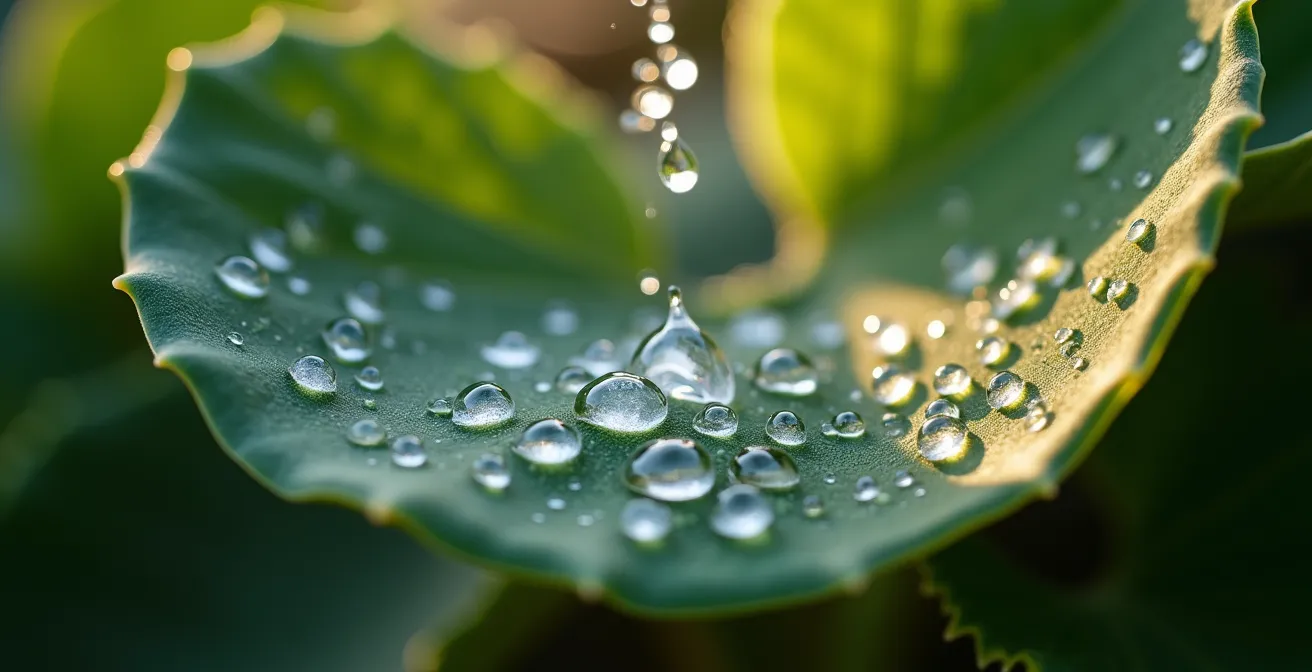
The most important task in a coastal garden is often the simplest: rinsing salt spray off the foliage of your plants after a storm or period of high onshore winds. As experts from the University of Florida IFAS Extension note, “Even with salt water abundantly available, coastal plants need fresh water to thrive.” Rinsing the leaves prevents the salt crystals from drawing moisture out of the foliage, a primary cause of leaf burn and wind desiccation. This single task can dramatically improve the health and appearance of your plants.
A simple yet effective weekly schedule focuses on these high-impact tasks, rotating through different jobs and areas of the garden so the workload always feels manageable.
- Task 1 (15 min): Post-Storm Check. After any significant wind or on the first day of the week, walk the garden. Rinse salt from the foliage of key plants, especially broadleaf evergreens. Check for any wind-rocked shrubs that need to be firmed back into the soil.
- Task 2 (15 min): Airflow & Health. Mid-week, focus on deadheading spent blooms and doing light pruning to improve air circulation. This is vital in humid coastal air to prevent fungal diseases.
- Task 3 (15 min): Weed & Mulch. Dedicate 15 minutes to weeding and topping up the mulch in one priority area, such as a wind-exposed border or the base of young trees.
- Task 4 (15 min): Prep & Tidy. Use the final block to clean and sharpen tools, or collect seaweed from the beach (where permitted) to rinse and use as a nutrient-rich mulch for the following week.
Start today by taking a 15-minute walk around your property, not with a shovel, but with a notebook. Identify the different zones—the windy corner, the dry shade under the pine, the strip by the road—and you will have taken the first and most important step toward creating a truly resilient coastal garden.