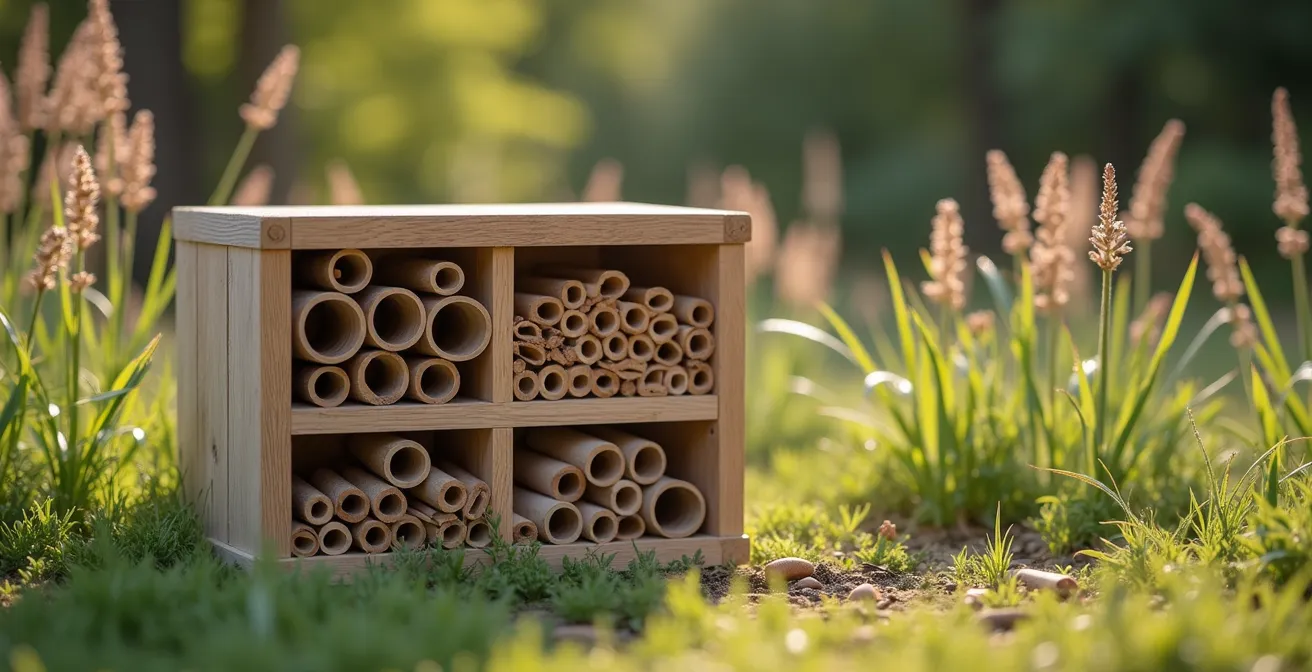
Most DIY insect hotels, despite good intentions, become lethal traps for the very bees they aim to help.
- Material choice and hygiene are non-negotiable; unmanaged tubes become reservoirs for deadly pathogens like mold and chalkbrood.
- Precise orientation and predator-proofing are critical architectural elements for larval survival and successful emergence.
Recommendation: Adopt an architectural mindset. Focus on hygienic modularity and annual maintenance to create a habitat that is not just attractive, but structurally sound and biologically safe.
The sight is familiar to any craft-loving gardener: a charming, rustic “bug hotel” assembled from a wooden frame and stuffed with bamboo canes, drilled logs, and pinecones. The intention is pure—to provide a much-needed home for the garden’s most valuable pollinators, the solitary bees. It feels like a small, tangible act of ecological goodwill. Yet, as you browse gardening forums, you’ve likely heard the unsettling whispers: stories of moldy tubes, parasite infestations, and hotels that become death traps rather than nurseries.
The common advice to simply “stuff a box with natural materials” overlooks a grim reality. A poorly designed or unmaintained insect hotel can quickly become a concentrated pathogen reservoir, actively harming the very bee populations it was meant to support. The difference between a thriving bee nursery and a biological dead end lies not in its rustic charm, but in its structural and hygienic integrity.
But what if the fundamental approach is flawed? What if the key is not to think like a crafter, but like a solitary bee housing architect? The true goal is to engineer a structure that manages moisture, regulates temperature, prevents disease, and defends against predators. This is not about building a decorative garden feature; it is about applying principles of biological architecture to create a safe and productive habitat.
This guide will walk you through the essential architectural considerations for designing an insect hotel that works. We will analyze nesting substrates, determine correct thermal orientation, establish non-negotiable hygiene protocols, and explore how to integrate your structure into a wider, more supportive garden ecosystem. It’s time to move beyond the craft project and build something that truly helps.
To navigate this architectural approach, we’ve structured this guide to address the most critical questions a responsible bee steward must ask. The following sections break down the core principles of designing a safe, effective, and sustainable insect hotel.
Summary: A Structural Guide to Safe Insect Hotels
- Bamboo vs Drilled Wood: Which Tube Material Resists Mold Better?
- South or East: Which Orientation Warms the Larvae Correctly?
- The Hygiene Mistake That Turns Hotels Into Parasite Breeding Grounds
- How to Add Wire Mesh to Stop Woodpeckers From Eating the Larvae?
- Solitary Bees vs Wasps: Who Is Actually Moving Into Your Hotel?
- The Mulch Mistake That Blocks Ground-Nesting Bees
- Pine Straw or Rubber Mulch: Which Is Truly Sustainable?
- Nematodes or Ladybugs: Which Biological Control Saves Lawns From Grubs?
Bamboo vs Drilled Wood: Which Tube Material Resists Mold Better?
The choice of nesting substrate is the foundational decision in insect hotel architecture. While both bamboo and drilled wood blocks are commonly used, neither is inherently superior without proper preparation and management. The primary enemy is moisture, which fosters the growth of lethal molds on bee bread, the pollen provision left for developing larvae. Bamboo, with its natural nodes, can trap moisture if not properly cleared. Solid wood blocks can also sweat and retain dampness, creating a dangerous microclimate.
The architectural solution is not to find a “perfect” material, but to design a system based on hygienic modularity. This is achieved with replaceable paper liners. These liners act as a barrier, wicking away excess moisture and, most importantly, allowing for the complete removal of old nesting material, cocoons, and potential pathogens each year. Research from Crown Bees highlights that solid wood blocks without liners and plastic straws lead to a significant year-over-year buildup of parasites and mold. Breathable, openable systems with annual liner replacement are the only way to break the disease cycle.
Regardless of whether you choose bamboo or wood, the material must be properly seasoned to reduce its internal moisture content before it’s ever offered to bees. A rushed process using “green” wood is an invitation for disaster. The goal is to provide a dry, stable structure that resists environmental humidity.
Action Plan: Seasoning Nesting Materials for Mold Prevention
- Material Selection: Choose untreated hardwood blocks (like oak or ash) or wide-diameter bamboo canes. Avoid any pressure-treated or painted wood.
- Air-Drying: Store the raw materials in a dry, covered, well-ventilated area (like a shed or garage) for a minimum of six months to allow moisture to escape slowly.
- Moisture Check: Before drilling or assembly, ensure the wood’s moisture content is below 20%. A wood moisture meter provides an accurate reading.
- Bamboo Preparation: If using bamboo, ensure all internal nodes are drilled or punched out to create a clean, open tunnel. This prevents moisture from being trapped in sealed chambers.
- Liner Integration: Annually, insert fresh, snug-fitting paper liners into every nesting tube. Ensure they are the correct thickness (around 0.010 inches) to provide structure without trapping moisture.
South or East: Which Orientation Warms the Larvae Correctly?
The placement of an insect hotel is a critical act of thermal regulation. A common but dangerous platitude is to “place it in a sunny spot.” This vague advice often leads gardeners to choose a south-facing wall, believing more sun is always better. From an architectural perspective, this is a mistake. A south-facing orientation can expose the hotel to intense, prolonged afternoon sun, effectively baking the developing larvae inside their cells and potentially causing them to emerge prematurely, out of sync with their essential food sources.
The optimal orientation is a balance between life-giving warmth and protection from extreme heat. An east or southeast-facing position is structurally ideal. It provides the gentle morning sun needed to warm the bees and encourage them to become active early in the day for foraging. By the time the sun reaches its peak intensity in the afternoon, the hotel is in shade, preventing overheating. Garden observations show that an eastern orientation provides this gentle warmth, with bee activity naturally ceasing as the sun moves overhead.
This strategic placement ensures the larval development is synchronized with the local environment and flower bloom times, giving the next generation the best possible chance of survival. The following table breaks down the structural impact of each orientation.
This comparative data, based on insights from the University of Vermont Extension, clarifies the critical role of orientation in larval development.
| Orientation | Morning Temperature | Afternoon Risk | Emergence Timing |
|---|---|---|---|
| Eastern | Gradual warming | Shaded from peak heat | Synchronized with flowers |
| Southern | Delayed warming | Overheating risk | May emerge prematurely |
| Southeast | Optimal balance | Moderate afternoon sun | Best synchronization |
The Hygiene Mistake That Turns Hotels Into Parasite Breeding Grounds
The single most catastrophic mistake in insect hotel management is the “set it and forget it” mindset. A hotel left to its own devices year after year does not become a charmingly weathered part of the landscape; it becomes a pathogen reservoir. Each used nesting tube can contain leftover pollen (which grows mold), bee feces, and, most dangerously, an accumulating population of parasites like pollen mites, chalkbrood fungus, and parasitic wasps.
When new bees nest in these contaminated tubes the following year, their offspring are exposed to a concentrated dose of these threats, leading to high mortality rates. The only way to prevent your hotel from becoming a biological trap is to embrace annual hygiene protocols. This is where the architectural concept of hygienic modularity, using replaceable paper liners or separable wood trays, becomes non-negotiable. It allows you to harvest viable cocoons while completely disposing of contaminated materials.
The maintenance process involves carefully removing the liners or opening the trays in the fall, cleaning and storing the healthy cocoons in a cold, dry place over winter, and thoroughly cleaning the hotel structure itself. This breaks the life cycle of parasites and ensures a clean start for the next generation.
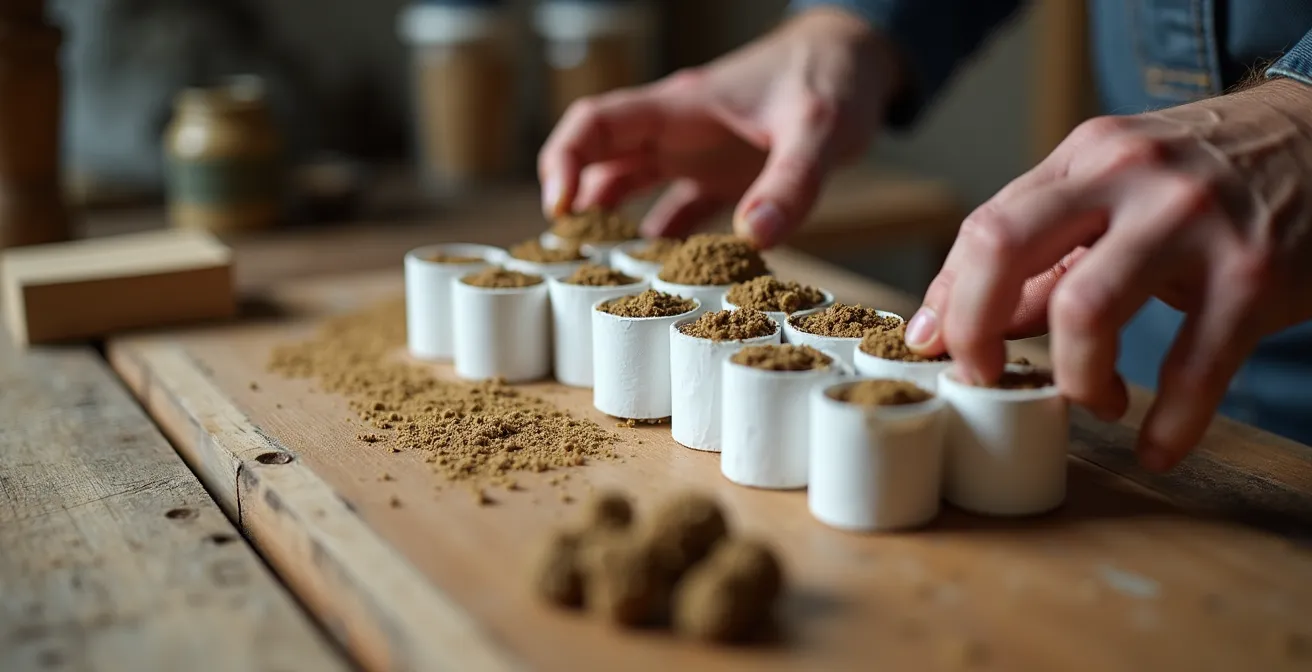
As this image demonstrates, a modular system is designed for maintenance. The ability to easily remove and replace individual nesting components is the core feature of a hygienically sound insect hotel. Come spring, the cleaned hotel is re-installed with fresh liners, and the overwintered cocoons are placed nearby, ready to emerge and start the cycle anew in a safe, sterile environment.
How to Add Wire Mesh to Stop Woodpeckers From Eating the Larvae?
Once you have successfully provided a safe nesting environment, the next architectural challenge is defense. Developing bee larvae are a rich source of protein, making your hotel a tempting buffet for birds, especially woodpeckers. A single woodpecker can decimate an entire hotel’s population in minutes, systematically pulling out mud caps and extracting the helpless larvae within. A simple but effective defense is to install a protective wire mesh barrier over the front of the hotel.
However, the precise installation is critical. A common mistake is to place the mesh directly against the tube openings. This provides a false sense of security. Woodpeckers have remarkably long tongues that can easily probe through the mesh and reach the larvae if there is no gap. The mesh must be installed as a “stand-off” screen, with a significant clearance between the wire and the nesting tubes.
Case Study: The Importance of Stand-Off Mesh Installation
In a guide on creating backyard habitats, the Sierra Club emphasizes the critical detail of mesh placement. Their field testing demonstrated that wire mesh must be positioned with a 2- to 3-inch clearance from the tube openings to be effective. Hotels with this proper spacing experienced zero predation from woodpeckers. In contrast, hotels where the mesh was placed flush against the openings still lost a staggering 30% of their larvae to bird predation, as the birds’ long tongues could easily bypass the ineffective barrier.
The timing of this installation is also important. The mesh should be put in place in the early fall, after you’ve observed the last of the season’s nesting activity. It remains on through the fall and winter, the most vulnerable period for the dormant larvae. In early spring, just before the bees are due to emerge, the mesh must be removed to allow them to exit freely.
Solitary Bees vs Wasps: Who Is Actually Moving Into Your Hotel?
A common concern for new hotel operators is whether they are housing beneficial bees or “scary” wasps. The reality is that your hotel will attract a variety of cavity-nesting insects, including many beneficial solitary wasps that are non-aggressive and play a vital role in controlling garden pests. The key to being a good “landlord” is to know your tenants. You can influence who moves in through architectural choices and learn to identify them by the “front door” they build.
The most important design factor is the diameter of the nesting tubes. Most beneficial solitary bees, like Mason and Leafcutter bees, are selective. University of California research confirms that these bees require tubes ranging from 3/16 to 5/16 of an inch (roughly 5mm to 8mm) in diameter. Tubes larger than this are often ignored by bees and instead become homes for spiders or less desirable occupants. Providing a range of hole sizes within this specific window is the best way to attract a diversity of bee species.
Once a tube is occupied, the resident will seal the entrance with a distinctive plug. Learning to read these plugs is like reading a tenant directory, telling you exactly who has taken up residence.
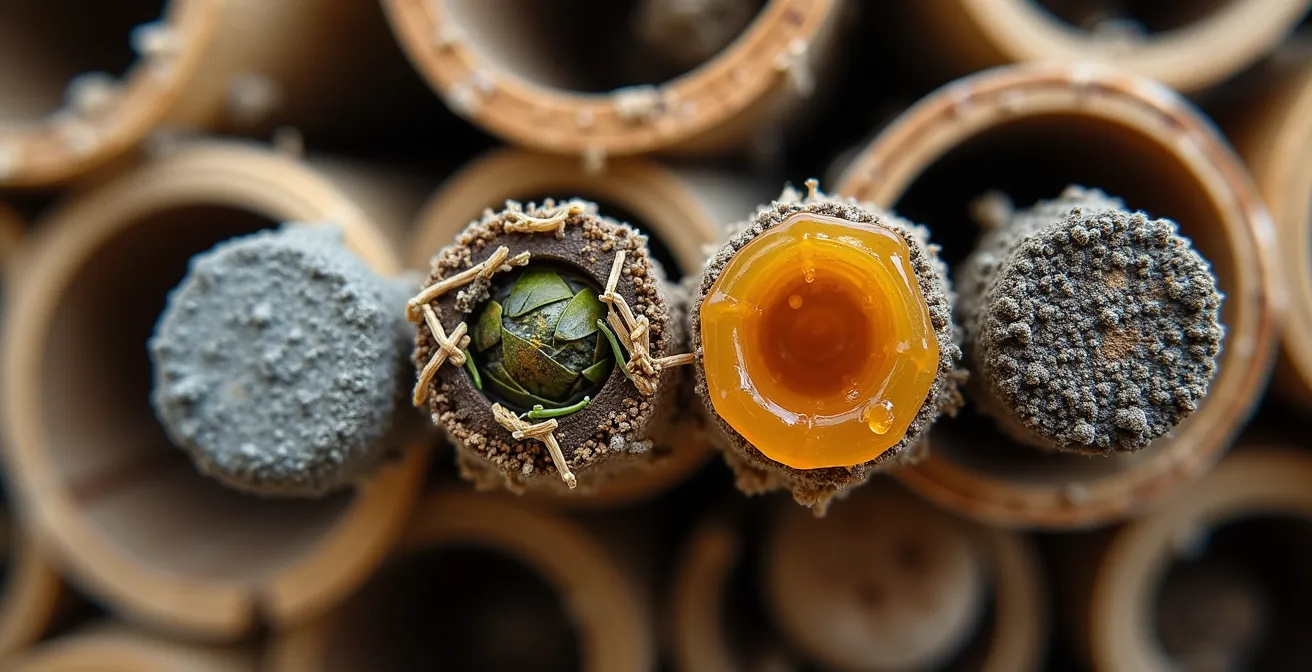
The table below, with data compiled from sources like MasonBeesForSale.com, provides a clear guide to identifying your hotel’s residents by their signature nest plug and understanding their role in your garden’s ecosystem.
| Plug Material | Insect Type | Beneficial Role |
|---|---|---|
| Mud plug | Mason bee | Primary pollinator |
| Leaf pieces | Leafcutter bee | Garden pollinator |
| Grass bundles | Grass-carrying wasp | Cricket predator |
| Resin/sticky material | Resin bee | Wildflower pollinator |
| No plug visible | Parasitic wasp | May harm bee larvae |
The Mulch Mistake That Blocks Ground-Nesting Bees
While building a high-quality insect hotel is a commendable act, it’s architecturally incomplete if you ignore the ground floor. A startling fact often overlooked by enthusiastic hotel builders is that cavity-nesting hotels only cater to a minority of bee species. Pollinator research reveals that approximately 70% of solitary bees are ground-dwellers. These bees, including many species of mining bees and sweat bees, excavate their nests in patches of bare, undisturbed soil. They will never use your hotel, no matter how perfectly designed it is.
The most common mistake gardeners make is unintentionally blocking access for this silent majority. The modern aesthetic of a heavily mulched, perfectly covered garden bed is a death sentence for ground-nesting bees. Thick layers of wood chips, impenetrable landscape fabric, and especially rubber mulch create a barrier that bees simply cannot dig through. To support the full spectrum of local pollinators, a garden architect must intentionally design and preserve areas of bare or lightly covered ground.
This doesn’t mean you have to give up mulch entirely. It’s about creating a mosaic of habitats. Dedicate a few sunny, well-drained patches of your garden to remain bare. In other areas, use a thin layer of organic, easily-disturbed mulch like fine leaf mold. The key is to provide access to the soil itself. This table outlines which common ground covers help or hinder ground-nesting bees.
Understanding these impacts, as detailed in resources from sites like Mequoda Food Gardening, is key to creating a truly bee-friendly landscape.
| Cover Type | Impact on Ground-Nesters | Alternative Solution |
|---|---|---|
| Rubber mulch | Completely blocks nesting | Leave bare soil patches |
| Landscape fabric | Prevents all ground access | Create designated nesting areas |
| Thick wood chips (3+ inches) | Too deep to dig through | Use thin layer (1 inch max) |
| Fine leaf mold | Allows some nesting | Good compromise option |
| Bare sandy soil | Ideal for ground-nesters | Maintain undisturbed patches |
Key takeaways
- Prioritize hygiene with replaceable paper liners and commit to annual cleaning to prevent your hotel from becoming a pathogen reservoir.
- Use an East or Southeast orientation to provide gentle morning sun for warmth and afternoon shade to prevent overheating and premature emergence.
- Remember that hotels only serve ~30% of solitary bees; leave patches of bare, undisturbed soil to provide habitat for the ground-nesting majority.
Pine Straw or Rubber Mulch: Which Is Truly Sustainable?
The choice of mulch goes beyond just providing access for ground-nesting bees; it’s a statement about the overall ecological health of your garden. From a sustainable architecture perspective, the materials we use should contribute positively to the ecosystem. Pine straw and shredded leaves are excellent choices. They are organic, locally sourced materials that slowly decompose, enriching the soil food web and providing vital overwintering habitat for countless beneficial insects, not just bees.
On the other end of the spectrum is rubber mulch. Often marketed as a “green” product because it’s made from recycled tires, it is an ecological disaster. It is an inert, synthetic barrier that smothers the soil, prevents natural decomposition, and offers zero habitat value. Worse, it actively harms the environment.
Case Study: The Environmental Damage of Rubber Mulch
An analysis by the Woodland Trust documents the severe negative impacts of using rubber mulch in gardens. Their research found that its dark surface creates “heat island” effects, raising soil temperatures by as much as 10°F compared to organic mulches, stressing plant roots. The material also leaches zinc compounds and other chemicals from the tires, which are toxic to aquatic life if they run off into waterways. Finally, as it breaks down over decades, it releases microplastics into the soil, creating a permanent pollution problem.
A truly sustainable garden is a living system. The choice is clear: use organic mulches that feed the soil and support a complex web of life. A sustainable approach involves:
- Choosing locally-sourced organic materials like pine straw or shredded leaves.
- Ensuring the material supports the soil food web through decomposition.
- Applying it in thin layers (1-2 inches) to allow ground access for insects.
- Avoiding all synthetic, plastic, or rubber-based products that harm the underlying ecosystem.
This holistic view ensures that every element of your garden design, from the roof of your bee hotel to the soil beneath your feet, contributes to a healthier environment.
Nematodes or Ladybugs: Which Biological Control Saves Lawns From Grubs?
A well-designed insect hotel is one component of a larger strategy: creating a balanced garden ecosystem that can manage its own pests. This is the ultimate goal of biological control. However, just like with bee hotels, well-intentioned actions can be ineffective if they are not based on sound science. A classic example is the practice of buying and releasing store-bought ladybugs to control aphids. It feels like a direct, proactive solution, but it’s largely a waste of money.
The problem is one of behavior and origin. Most commercially available ladybugs are wild-harvested and have a strong instinct to disperse widely upon release. Zoological Society research indicates that the vast majority simply fly away from your garden within a day or two, never sticking around to eat your aphids. A far more effective strategy is to create a habitat that attracts and retains a local ladybug population—which an insect hotel and native plants can help with.
For specific, targeted problems like lawn grubs, a much more precise and effective biological control is needed. Rather than a generalist predator, the solution lies in applying a specialist pathogen. This table compares the effectiveness of different biological control methods for common garden problems.
This data, synthesized from permaculture and entomology resources like those found on Permies.com, shows the importance of choosing the right tool for the job.
| Control Method | Target Pest | Application Timing | Effectiveness |
|---|---|---|---|
| Beneficial nematodes | Soil grubs | Evening, moist soil | 80-90% grub reduction |
| Milky spore | Japanese beetle grubs | Fall application | Long-term control (10+ years) |
| Insect hotels | General pests | Year-round habitat | Sustained predator presence |
| Released ladybugs | Aphids | Not recommended | Poor (dispersal issue) |
Ultimately, the “architectural” approach to your garden is about intelligent, informed choices. It’s a shift from being a passive builder to an active ecosystem steward. By focusing on material science, hygiene, and a holistic view of your garden’s habitats, you create a space that is not just beautiful, but biologically functional and genuinely supportive of the wildlife within it. Begin today by auditing your garden with these principles, and commit to creating habitats that are not just attractive, but structurally sound and safe.