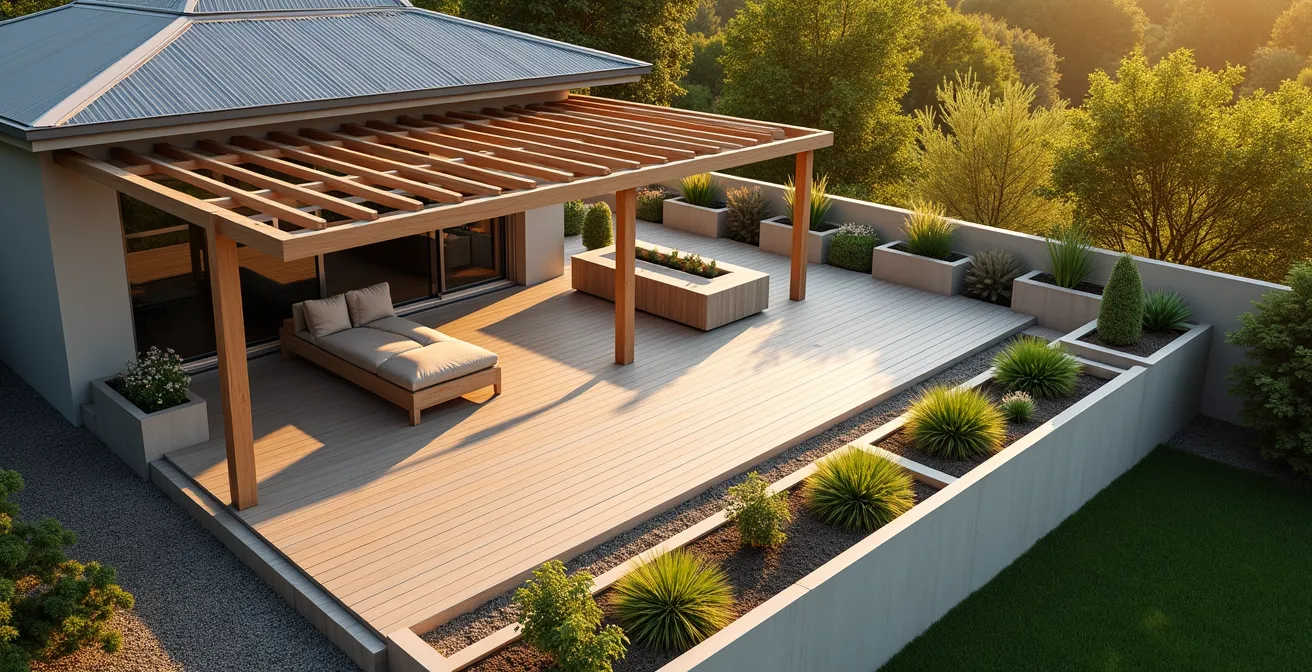
In summary:
- A truly sustainable extension is an integrated system, not just a collection of ‘green’ products.
- Prioritize lifecycle performance—longevity, maintenance, and end-of-life—over simple material labels like ‘recycled’ or ‘FSC’.
- Design for passive regulation by integrating features like pergolas and green roofs to actively reduce your home’s energy consumption.
- Choose living systems like rain gardens and living mulches to create a resilient, self-sustaining ecosystem.
For the eco-conscious homeowner, the dream of expanding living space outdoors often comes with a nagging question: can it be done without compromising environmental values? The common advice often circles around familiar platitudes—use FSC-certified wood, install some solar lights, or choose furniture made from recycled plastics. While these are good starting points, they barely scratch the surface of what’s possible and often miss the bigger picture.
What if the most impactful approach wasn’t about picking individual eco-products off a shelf, but about designing your entire outdoor extension as an integrated, high-performance system? This perspective shifts the focus from simple material choices to a holistic consideration of the entire lifecycle. It asks deeper questions: How will the materials endure over decades? How can the structure actively reduce the home’s heating and cooling needs? How does it manage water and support local biodiversity?
This is where a forward-thinking, systems-based approach comes in. A truly sustainable extension works in harmony with your home and its environment, becoming a functional part of the ecosystem rather than a passive addition. This guide will walk you through this paradigm shift, exploring how to make intelligent, evidence-based decisions for every component of your project—from the decking underfoot to the roof overhead.
The following sections will deconstruct this systems-thinking approach, providing a clear roadmap to creating an outdoor space that is not only beautiful and functional but also a tangible asset in reducing your home’s overall carbon footprint.
Summary: A Systems-Thinking Guide to Sustainable Outdoor Extensions
- Composite vs FSC Wood: Which Decking Material Is Truly Greener?
- How to Design a Solar Lighting Plan That Actually Illuminates Steps?
- Rain Garden or French Drain: Which Handles Roof Runoff Better?
- The “Eco” Furniture Trap: Why Some Recycled Plastics Breakdown Quickly
- How to Position Pergolas to Lower Indoor Temperatures by 5 Degrees?
- Extensive vs Intensive Green Roofs: Which Cools the Building More?
- Pine Straw or Rubber Mulch: Which Is Truly Sustainable?
- How to Implement Biophilic Design for Urban Spaces Without a Garden?
Composite vs FSC Wood: Which Decking Material Is Truly Greener?
The choice between wood and composite decking is a classic sustainability dilemma. On one hand, wood is a renewable resource that actively stores carbon. In fact, studies show that timber can store approximately 0.9 tonnes of CO₂ equivalent per cubic metre, making it a carbon-negative material at the point of harvest. Using FSC-certified wood ensures it comes from responsibly managed forests, a critical first step. On the other hand, composite decking often utilizes a high percentage of recycled materials, diverting plastic and wood waste from landfills.
However, the real answer lies beyond the initial material source and requires a Lifecycle Assessment (LCA). This analysis considers the “cradle-to-grave” impact, including manufacturing energy, transportation, maintenance requirements, and end-of-life disposal. A material that requires frequent chemical treatments, repairs, or replacement can quickly negate its initial environmental benefits. This is where high-quality composites gain an edge.
Case Study: TimberTech’s Lifecycle Analysis
A comprehensive LCA by TimberTech compared their composite decking (made with 80% recycled content) to traditional pine and tropical Ipe wood. Over a 50-year analysis, the composite decking, with an average lifetime of 27.8 years, demonstrated a lower overall lifecycle carbon footprint than both pine (requiring replacement every 10 years) and Ipe (with a 25-year life but significant impacts from potential illegal harvesting). This highlights that durability and low maintenance are more critical long-term sustainability factors than initial embodied energy alone.
Ultimately, the “greener” material is the one that performs best over the longest period with the least intervention. Answering this requires looking past marketing labels and evaluating the full picture.
Your Action Plan: 5 Factors for Evaluating Decking Sustainability
- Certification Verification: For wood, always verify its FSC or PEFC certification to confirm responsible forestry practices. For composites, investigate the percentage and source of recycled content.
- Embodied Energy Calculation: Consider the energy used in manufacturing, transportation (prioritizing local sourcing), and installation.
- Lifetime Maintenance Assessment: Quantify the required chemical treatments (stains, sealers), cleaning products, and potential repairs over the product’s expected lifespan.
- End-of-Life Scenario Planning: Evaluate what happens at the end of its life. Is the material recyclable, reusable, or will it biodegrade? Many composites are difficult to recycle.
- Local Sourcing Prioritization: Reduce transportation emissions and support regional economies by choosing materials manufactured or harvested as close to your home as possible.
How to Design a Solar Lighting Plan That Actually Illuminates Steps?
Switching to solar lighting is a common eco-friendly move, but success hinges on performance-based design, not just product selection. Many homeowners are disappointed when their inexpensive solar stakes cast a dim, unreliable glow. A truly effective solar lighting plan for steps requires a systems approach that balances energy collection, storage, and light output. The goal is safety and ambiance, which demands consistent, targeted illumination.
The effectiveness of a solar lighting system is directly tied to your geographic location. The amount of “daily sun hours” a panel receives dictates the wattage and battery capacity needed to power the lights through the night, especially during shorter winter days. A system that works perfectly in Arizona may fail completely in the Pacific Northwest without proper specification.
This table illustrates how to match system specifications to your climate zone for reliable performance powering 10 step lights.
| Climate Zone | Daily Sun Hours | Panel Wattage for 10 Step Lights | Battery Capacity Needed |
|---|---|---|---|
| High Solar (Southwest US) | 6-7 hours | 20W | 2000 mAh |
| Moderate Solar (Mid-Atlantic) | 4-5 hours | 30W | 3000 mAh |
| Low Solar (Pacific Northwest) | 2-3 hours | 40W | 4000 mAh |
This data from the U.S. Department of Energy on solar radiation shows why a one-size-fits-all approach is doomed to fail. Beyond specs, placement is key. Panels need unobstructed southern exposure, while the lights themselves should be positioned to wash light across stair treads without creating glare for those ascending or descending.
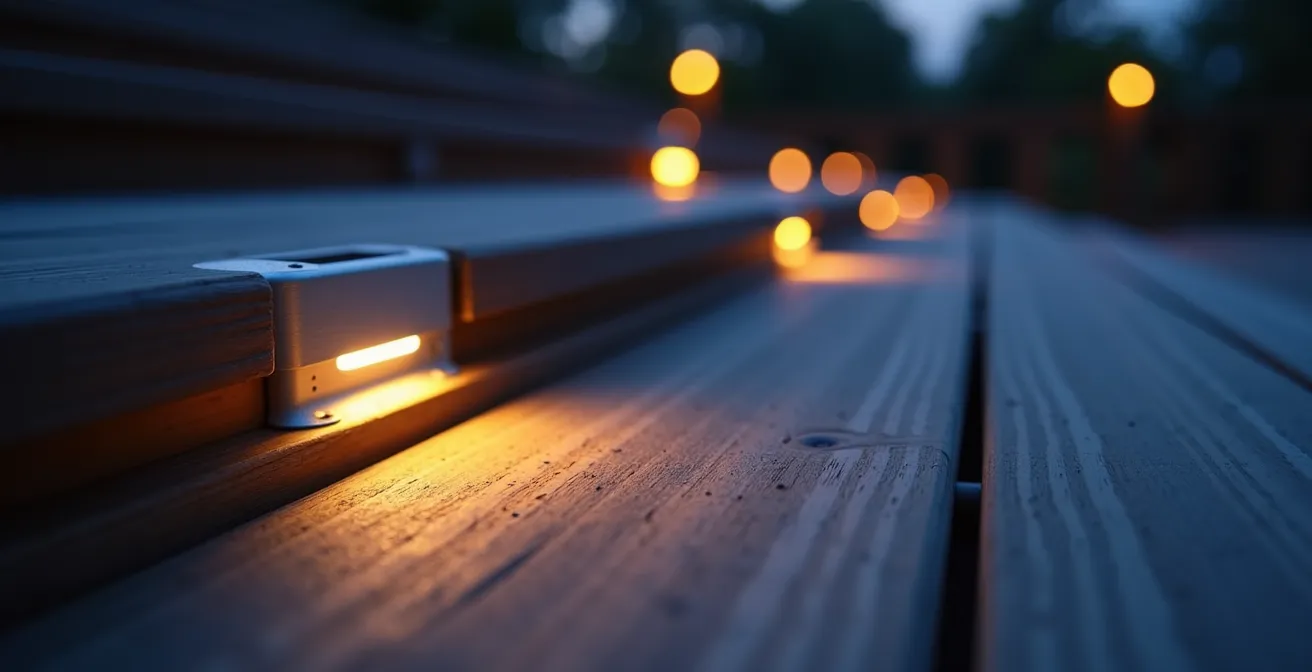
As seen here, integrating LED strips into step risers provides effective, non-glare illumination. This thoughtful design ensures both safety and aesthetic appeal, proving that a successful solar lighting system is born from a strategic plan, not an impulse buy.
Rain Garden or French Drain: Which Handles Roof Runoff Better?
Managing stormwater runoff from your roof and deck is a critical part of a sustainable design. Uncontrolled runoff can cause soil erosion, flood basements, and carry pollutants into local waterways. The two most common solutions are rain gardens and French drains, but they operate on fundamentally different principles. A French drain is an engineered redirection system, using a gravel-filled trench and perforated pipe to carry water away. A rain garden is a living infiltration system, using a shallow depression with specific plants and soil to capture water and allow it to soak into the ground.
The optimal choice depends almost entirely on your soil’s percolation rate. For a rain garden to be effective, the soil must be able to absorb water relatively quickly—ideally at a rate of at least 1 inch per hour. In heavy clay soils with poor drainage (less than 0.5 inches per hour), a rain garden can become a stagnant pond. In these situations, a French drain is the more reliable solution for preventing water damage.
While a French drain effectively solves the water problem, a rain garden offers a host of co-benefits that align with an integrated system approach. It recharges groundwater, filters pollutants, reduces lawn-mowing needs, and creates a vital habitat for pollinators and birds. Though it requires seasonal plant maintenance, it transforms a drainage problem into a landscape asset. For maximum resilience, a hybrid approach can be used: a rain garden designed with a French drain overflow outlet. This provides the ecological benefits of infiltration during normal rainfall and the failsafe protection of redirection during extreme storm events.
The “Eco” Furniture Trap: Why Some Recycled Plastics Breakdown Quickly
The promise of outdoor furniture made from recycled plastics, especially ocean-bound waste, is compelling. It feels like a clear win-win. However, not all recycled plastics are created equal, and many homeowners fall into the “eco” furniture trap, discovering their investment becomes chalky, brittle, and faded after just a few seasons. The issue lies in material integrity and UV degradation. Plastic’s durability is determined by its polymer chains; recycling can shorten these chains, and mixing different types of plastics can create weak points.
High-quality outdoor furniture is typically made from High-Density Polyethylene (HDPE), the type of plastic found in milk jugs and detergent bottles. When sourced consistently and properly processed with UV stabilizers and colorants, HDPE can last for decades. In contrast, furniture made from mixed, unsorted post-consumer plastics may contain polymers with low resistance to sunlight. Without sufficient UV inhibitors, the sun’s radiation breaks down the plastic’s chemical bonds, causing the surface to oxidize and become brittle.
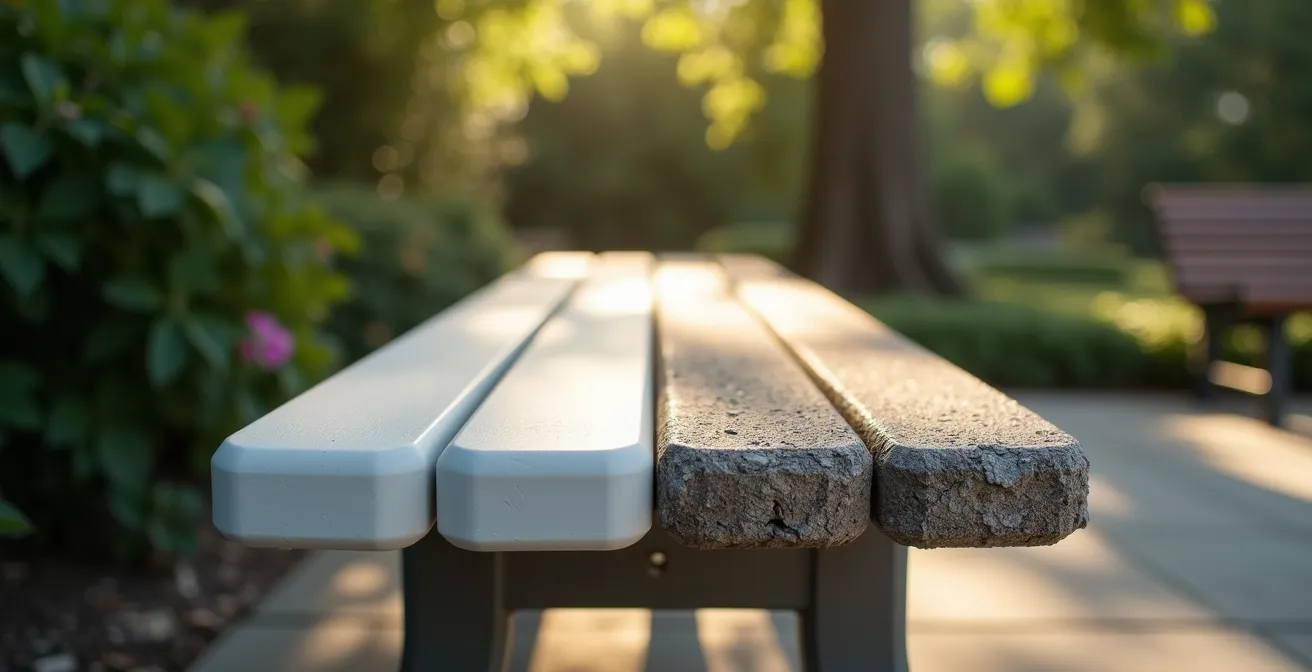
The visual evidence of UV degradation is stark. A once-vibrant and smooth surface can transform into a chalky, cracked material that has lost its structural integrity. To avoid this trap, you must look beyond the “recycled” label. Investigate the specific type of plastic used (look for HDPE), inquire about the percentage of post-consumer content, and, most importantly, check the manufacturer’s warranty. A long warranty (10+ years) is the best indicator that the company has used high-quality materials and additives to ensure long-term durability, the true hallmark of sustainability.
How to Position Pergolas to Lower Indoor Temperatures by 5 Degrees?
A pergola is often seen as a decorative feature, but when designed as part of an integrated system, it becomes a powerful tool for passive climate regulation. By strategically blocking high-angle summer sun from hitting windows and walls, a well-positioned pergola can significantly reduce indoor temperatures and cut air conditioning costs. This isn’t just theory; it’s a measurable outcome of smart, climate-aware design.
Case Study: Chicago Smart Home’s Green Pergola
The Chicago Smart Home exhibit integrated a pergola with a green roof system using deciduous vines. This dynamic shading device led to a demonstrated 6-degree temperature reduction in adjacent indoor spaces during peak summer. The system provided near-total shade in summer but allowed full solar gain in winter after the vines dropped their leaves. This passive, self-regulating system reduced the home’s annual HVAC energy consumption by a remarkable 23% according to the exhibit’s data.
Achieving these results requires precise positioning based on your home’s latitude and orientation. The goal is to create a “shade mask” that is effective during the hottest months but disappears during the colder months when passive solar heating is desirable. This can be achieved through careful planning.
Follow these steps to optimize your pergola for maximum cooling effect:
- Map the Sun’s Path: Use a sun path calculator tool online to determine the exact sun angles for your specific latitude during the summer solstice (highest sun) and winter solstice (lowest sun).
- Calculate Pergola Depth: For complete summer shading of a south-facing window (in the Northern Hemisphere), the pergola’s depth should be approximately 1.5 times the height of the window.
- Angle Louvers Correctly: If using an adjustable louvered pergola, angling the louvers at a value equal to your latitude minus 15 degrees provides excellent control for seasonal sun.
- Orient for Exposure: The longest side of the pergola should be oriented perpendicular to the predominant summer sun exposure, which is typically south-facing in the Northern Hemisphere.
Extensive vs Intensive Green Roofs: Which Cools the Building More?
A green roof is one of the most effective strategies for an integrated, sustainable extension, combating the urban heat island effect right at the source. It cools the building through shade, insulation, and a process called evapotranspiration. There are two main types: extensive and intensive. An extensive roof has a shallow growing medium (2-6 inches), is lightweight, and supports hardy, low-maintenance plants like sedums. An intensive roof is essentially a rooftop garden, with a deep soil layer (8+ inches) that can support shrubs and even small trees, but requires significant structural support and maintenance.
While an intensive roof provides greater cooling due to its larger plant mass and soil volume, an extensive roof is almost always the more practical and efficient choice for a residential extension. Its lighter weight means it can often be installed on standard roof structures without costly reinforcement. The benefits are still substantial. Research from Penn State Extension demonstrates that even extensive green roofs retain 50-90% of rainfall, dramatically reducing stormwater runoff.
The cooling and environmental benefits are quantifiable. A comprehensive study on green roof performance found that they can absorb approximately 1.79 kg of CO2 and save 11.53 kWh of energy per square meter annually. This direct reduction in energy for cooling, combined with CO2 sequestration and stormwater management, makes a green roof a multi-functional powerhouse in a sustainable system. For a homeowner, the extensive green roof offers the best balance of high performance, cost-effectiveness, and low maintenance, transforming a passive surface into an active, cooling ecosystem.
Pine Straw or Rubber Mulch: Which Is Truly Sustainable?
The debate over garden mulch often pits pine straw against rubber mulch. Pine straw is a natural, renewable by-product of the timber industry, but it decomposes and needs frequent replacement. Rubber mulch is made from recycled tires, giving a second life to a problematic waste product, but it can leach chemicals into the soil and does not contribute to soil health. This debate, however, misses a third, superior option that aligns perfectly with an integrated ecosystem approach: living mulch.
Living mulch, or green mulch, involves using low-growing, spreading groundcover plants like creeping thyme, white clover, or certain sedums to cover the soil. Instead of a static, decaying layer, you create a dynamic, living system that offers far more benefits than any bagged product. It’s the ultimate expression of a self-sustaining design.
Case Study: The Superiority of Living Mulch
A three-year trial at Penn State Extension compared traditional mulches with living groundcover alternatives. The results were definitive. The plots with creeping thyme and white clover showed a 40% reduction in soil temperature fluctuations and a 60% reduction in water evaporation compared to traditional mulches. After establishment, they provided complete weed suppression. Furthermore, the clover fixed 15-30 lbs of nitrogen per 1000 sq ft annually, enriching the soil, and the plants provided habitat for 23 species of beneficial pollinators. This demonstrates superior sustainability on every metric.
By choosing a living mulch, you stop thinking about mulch as a disposable commodity and start thinking of it as a functional part of your garden’s ecosystem. It builds soil health, conserves water, suppresses weeds, and supports biodiversity, all while eliminating the recurring cost and labor of re-applying traditional mulch.
Key takeaways
- Lifecycle Over Labels: True sustainability is measured in decades of performance. Prioritize materials with proven durability and low maintenance over those with simple ‘recycled’ or ‘natural’ labels.
- Integration Is a Multiplier: Your extension has the most impact when it’s an integrated system. A pergola that cools the house or a green roof that manages stormwater provides value far beyond its primary function.
- Living Systems Outperform Static Ones: Whenever possible, choose living solutions like rain gardens and living mulches. They create resilient, self-sustaining ecosystems that offer compounding benefits static materials can’t match.
How to Implement Biophilic Design for Urban Spaces Without a Garden?
The final layer of a truly sustainable extension is connecting it to human well-being. This is the role of biophilic design, which incorporates elements of nature into the built environment to reduce stress and improve health. For urban dwellers with limited space, this can seem challenging. However, effective biophilic design is about more than just plants; it’s about mimicking the patterns, materials, and sensory experiences of the natural world.
You can create a powerful connection to nature even on a small balcony or patio by focusing on non-plant-based strategies. The goal is to create sensory-rich experiences that provide a feeling of refuge and connection. This can be achieved through the clever use of materials, light, and sound, turning even the most compact urban space into a restorative retreat. Studies have shown that these elements can lead to a 15% improvement in reported well-being when integrated into living spaces.
Here are five powerful non-plant biophilic strategies for small urban extensions:
- Auditory Connection with Water: Install a small, self-contained water feature made with natural stone. The sound of trickling water is a powerful, primal stress reducer.
- Visual Complexity with Fractal Patterns: Use tiles, decorative screens, or outdoor rugs that feature fractal patterns—the repeating, self-similar shapes found in ferns, river deltas, or snowflakes.
- Dynamic and Natural Light: Implement a smart lighting system that mimics the natural circadian rhythm, shifting from a warm, gentle light in the morning (3000K) to a brighter, blue-toned light at midday (5500K), and back to a warm amber in the evening (2700K).
- Prospect and Refuge Spaces: Even on a small balcony, create a “refuge” with a comfortable, high-backed chair in a corner that overlooks the “prospect” of the open view. This satisfies an innate human desire for safety and observation.
- Tactile Connections with Natural Materials: Use materials that are satisfying to the touch. Incorporate unfinished wood for armrests, cork flooring tiles, or wool and linen textiles for cushions and throws.
Frequently Asked Questions on Sustainable Outdoor Extensions
What soil percolation rate determines the best drainage solution?
Soils with percolation rates above 1 inch per hour suit rain gardens, while rates below 0.5 inches per hour require French drains or bioswales with underdrains to prevent waterlogging.
How much maintenance does each system require annually?
Rain gardens need seasonal plant maintenance and mulching, French drains require periodic sediment removal from catch basins, while bioswales need both plant care and flow channel maintenance.
Can these systems be combined for maximum effectiveness?
Yes, a hybrid approach using a rain garden with an overflow French drain provides both infiltration benefits and backup drainage during extreme weather events.
What is the minimum space needed for effective biophilic design?
Even a 4×6 foot balcony can incorporate biophilic elements through vertical gardens, natural materials, and carefully positioned seating to create prospect-refuge dynamics.
How can renters implement biophilic design without permanent changes?
Use removable wallpaper with nature patterns, portable water fountains, natural fiber rugs, and smart bulbs programmed for circadian lighting without any structural modifications.
What measurable benefits can urban dwellers expect from biophilic design?
Studies show 15% increase in productivity, 6% increase in creativity, and 15% improvement in reported wellbeing when biophilic elements are incorporated into living spaces.
Start designing your outdoor extension not as an addition, but as an integrated ecosystem. By applying this systems-thinking approach, you can create a beautiful, high-performance space that actively reduces your carbon footprint and aligns perfectly with your values.