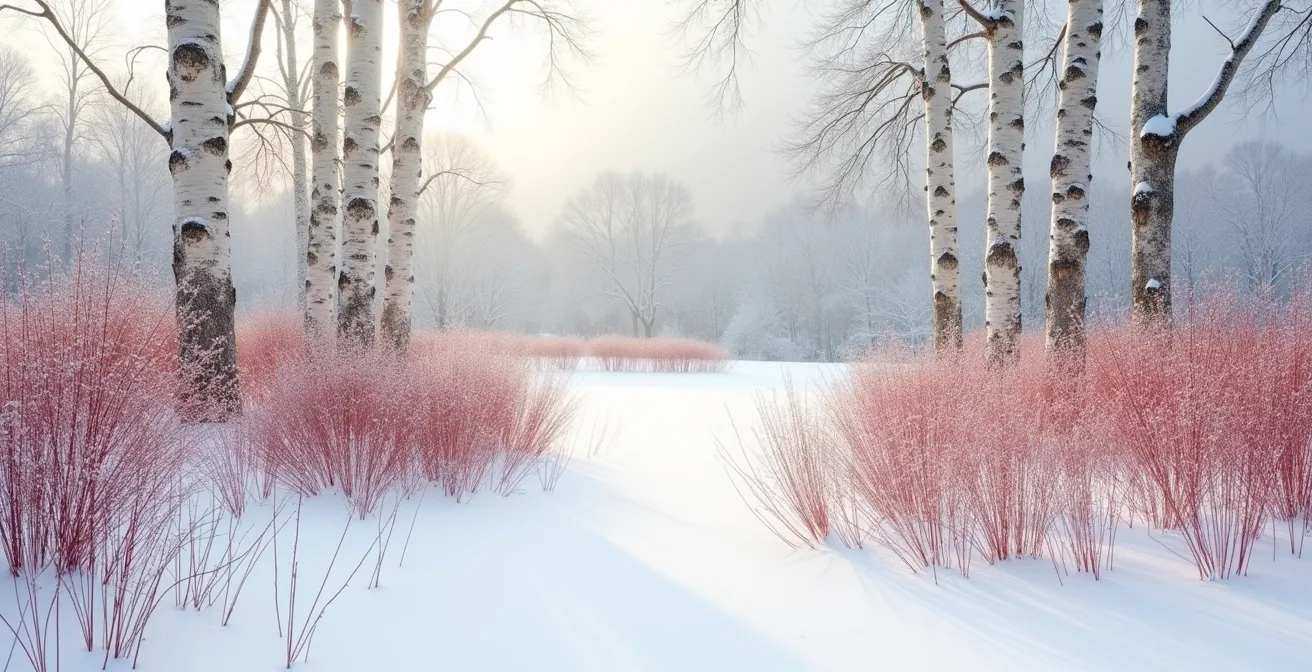
The secret to beating the winter blues isn’t fighting the snow, but designing a garden whose beauty is *revealed* by it.
- Focus on the “structural bones” of your garden—evergreens, branching patterns, and colorful bark that create a strong silhouette.
- Layer in “textural elements” like ornamental grasses and persistent seedheads that catch frost and light.
- Incorporate surprising pops of life with early-blooming flowers and strategically placed plants that glow in the low winter sun.
Recommendation: Stop the aggressive fall cleanup. Start thinking of your garden not as a dormant space, but as a year-round living sculpture waiting to be unveiled.
When the first heavy snow blankets the landscape, it’s easy for a northern gardener’s heart to sink. The vibrant colors of summer and fall are gone, replaced by a seemingly endless expanse of white and brown. For months, the view from the window can feel bleak, barren, and frankly, depressing. The common advice is to plant a few evergreens or shrubs with berries, but this often results in a static scene that does little to lift the spirits. It treats winter as an afterthought, a problem to be endured rather than an opportunity to be embraced.
But what if the key wasn’t just dotting the landscape with a few “winter interest” plants? What if the snow wasn’t an eraser, but a canvas? The true art of four-season design lies in creating a garden that has such strong structural bones and rich textural layers that the snow and frost only serve to highlight its beauty. It’s about choreographing a scene where form, texture, and light interact to create a living sculpture that evolves with every snowfall and frosty morning. This approach transforms the winter garden from a place of absence into a destination of subtle, profound beauty.
This guide will walk you through the essential strategies to transform your barren backyard into a dynamic winter masterpiece. We will explore how to select plants for their winter silhouette, how to harness the power of light and texture, and why a little bit of “messiness” is the secret to a garden that is truly alive, even in the deepest freeze. Your view is about to become a work of art, 365 days a year.
To help you build this resilient and beautiful landscape, we will cover the essential pillars of winter garden design, from choosing the right structural plants to understanding the art of dormancy. Explore the topics below to find the inspiration and practical advice you need.
Summary: Crafting a Winter Landscape That Fights the Grey
- Red Twig Dogwood or Birch: Which Bark Stands Out Best Against Snow?
- Witch Hazel or Hellebores: Which Blooms First in Your Zone?
- Conifer Shapes: How to Mix Columnar and Globe Forms for Winter Structure?
- The Cleanup Mistake That Removes Winter Texture and Bird Food
- How to Combine Ornamental Grasses With Fall Perennials for Late Color?
- Why Does Your Plant Look Dead When It Is Just Sleeping?
- Why Native Gardens Look Messy to Some and How to Give Them Structure?
- How to Manage Winter Dormancy for Potted Plants Without a Greenhouse?
Red Twig Dogwood or Birch: Which Bark Stands Out Best Against Snow?
When the leaves fall, a plant’s bark becomes its most prominent feature. Against a stark white backdrop of snow, bark color and texture are your most powerful tools for creating visual drama. Two champions of the winter garden, Red Twig Dogwood (Cornus sericea) and Paper Birch (Betula papyrifera), offer brilliant contrast, but they serve very different design functions. It’s not about which is better, but how you use them to paint your winter scene.
Red Twig Dogwood is all about a bold, horizontal slash of color. Its stems, ranging from bright scarlet to deep burgundy, are most vibrant on new growth. For the most intense effect, they should be planted in masses or drifts. Imagine a thicket of fiery stems catching the low winter sun, creating a breathtaking glow against the snow. They are fast-spreading shrubs, perfect for creating a field of color that draws the eye across the landscape. To maintain that brilliant red, it’s essential to prune out the oldest, dullest-colored stems every few years in early spring, encouraging a flush of new, colorful growth.
Birch trees, in contrast, provide vertical, sculptural elegance. Their peeling white bark offers a more subtle, ghostly beauty. Rather than a mass of color, they create strong vertical lines that add height and a sense of permanence to the garden. Planting them in groves of three or five creates a stunning architectural statement, with their white trunks standing out like pillars in a snowy cathedral. They work beautifully as a backdrop, their pale bark making the fiery stems of a dogwood hedge planted in front of them seem even more brilliant. By combining the verticality of birch with the horizontal mass of dogwood, you create a layered, dynamic composition that has interest from the ground up.
Witch Hazel or Hellebores: Which Blooms First in Your Zone?
Just when the winter grey feels most relentless, a few heroic plants defy the season and burst into bloom. These first flowers are a profound source of hope and color, signaling that spring, however distant, is on its way. Two of the earliest and most celebrated winter bloomers are Witch Hazel (Hamamelis) and Hellebores (Helleborus), often called Lenten Roses. The choice between them depends not only on your aesthetic preference but also on your climate and where you want to see that first spark of life in your garden.
Witch Hazel is a true winter showstopper, a large shrub that erupts in fragrant, spidery flowers on bare branches. Depending on the variety and your location, these fragrant blooms can appear anytime from December to February. The flowers, in shades of electric yellow, fiery orange, or rich red, are held at eye level, making them impossible to miss. They are best sited where you can appreciate their spicy fragrance, perhaps near a walkway or entryway you use often. Their open, vase-like structure also adds an elegant architectural element to the winter landscape even before the blooms appear.
This side-by-side view highlights the different ways these plants present their color. Witch Hazel offers a fragrant, eye-level burst, while Hellebores provide a more subtle, ground-level surprise.
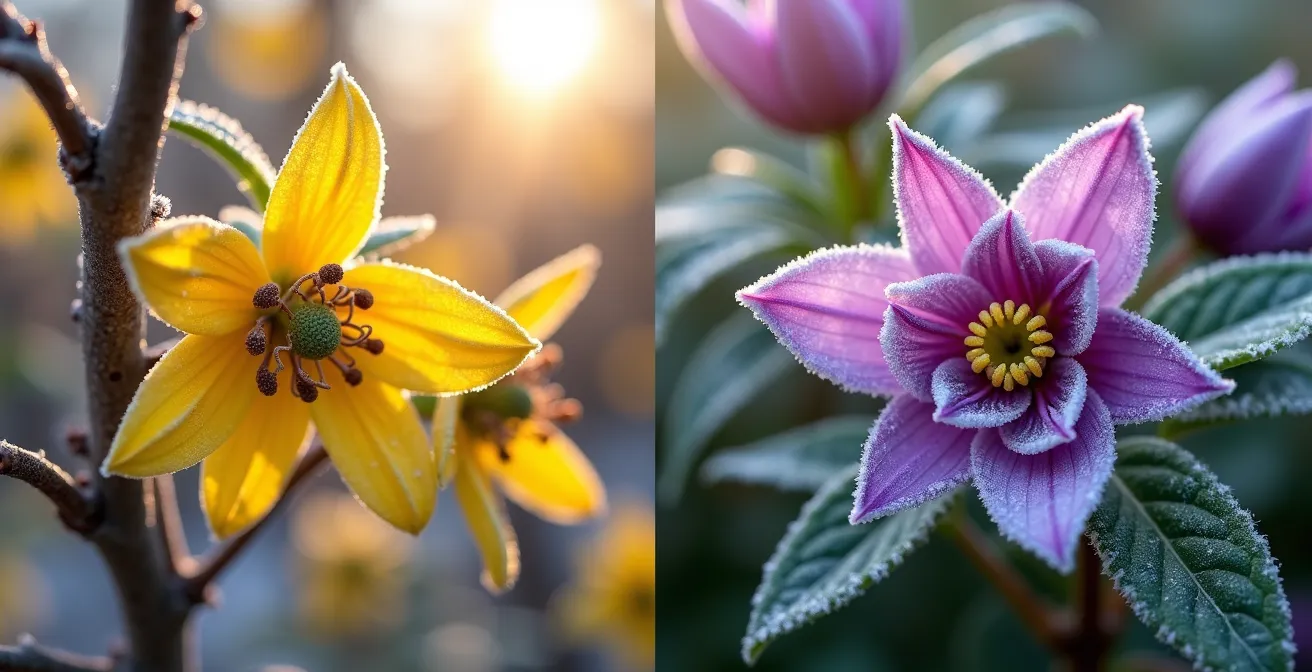
Hellebores, on the other hand, are ground-level treasures. These tough-as-nails perennials push their nodding, cup-shaped flowers up through the snow, often starting in late winter and continuing into early spring. With their evergreen, leathery foliage and blooms in shades of white, pink, deep purple, and near-black, they bridge the gap between the last snowfall and the first spring bulbs. As an authoritative study on winter gardens highlights, creating a continuous display is key, and an effective strategy is using sequential planting to avoid gaps in flowering. Hellebores are perfect for this, picking up the baton as Witch Hazel’s display fades. Because their flowers often face downward, they are best planted on a slope or in a raised bed where their subtle beauty can be fully appreciated.
Conifer Shapes: How to Mix Columnar and Globe Forms for Winter Structure?
If deciduous plants are the garden’s seasonal performers, conifers are the steadfast stage crew, providing the essential structure or “bones” that hold the entire production together. When snow erases the ground plane, this evergreen framework becomes the star of the show. However, a garden filled with only one type of conifer can feel monotonous. The real magic happens when you mix their varied shapes, colors, and textures to create a dynamic, sculptural landscape.
Conifers are the backbone of year-round garden design—offering structure, texture, and color in every season
– Fine Gardening Editorial Team, Fine Gardening Magazine
Think of conifer shapes as your primary building blocks. Columnar forms, like ‘Skyrocket’ Juniper or ‘Emerald Green’ Arborvitae, act as vertical accents. They draw the eye upward, create exclamation points in the landscape, and are perfect for framing a view or an entryway. Globe or mounded forms, such as a dwarf Blue Spruce or Mugo Pine, provide weight and rhythm. They anchor the corners of a garden bed and, when repeated, create a pleasing sense of flow and stability. Weeping forms, like the dramatic Weeping Blue Atlas Cedar, are natural focal points, their drooping branches creating a living sculpture that is especially beautiful when draped in snow. Finally, spreading forms like ‘Blue Rug’ Juniper serve as evergreen groundcover, providing a textural carpet that contrasts with taller elements.
The key to a successful design is combining these forms to create tension and harmony. Place a few tall, skinny columnar junipers behind a group of low, rounded mugo pines. The contrast in shape and direction creates immediate visual interest. Use a single, dramatic weeping cedar as a specimen plant, giving it plenty of space to be admired, and then surround it with a low, spreading groundcover to emphasize its unique form. The following table breaks down how to use these different forms effectively.
| Form Type | Best Varieties | Design Use | Spacing |
|---|---|---|---|
| Columnar | Juniper ‘Skyrocket’, Thuja ‘Emerald Green’ | Vertical accent, framing views | 4-6 feet apart |
| Globe | Blue Spruce ‘Montgomery’, Mugo Pine | Foundation planting, rhythm | 3-4 feet apart |
| Weeping | Weeping Blue Atlas Cedar | Focal point, specimen | 10+ feet from others |
| Spreading | Juniper ‘Blue Rug’ | Groundcover, erosion control | 5-6 feet apart |
The Cleanup Mistake That Removes Winter Texture and Bird Food
One of the most common yet detrimental habits of tidy gardeners is the aggressive fall cleanup. The urge to cut everything back to the ground creates a neat but sterile landscape, robbing your winter garden of its most interesting textural elements and decimating a vital food source for birds. Resisting this urge is perhaps the single most impactful change you can make to create a lively, beautiful winter scene. The “mess” of dormant perennials is, in fact, the very soul of the winter garden.
The dried seedheads of perennials like Coneflower (Echinacea) and Black-Eyed Susan (Rudbeckia) are not just beautiful, they are natural bird feeders. Their dark, graphic shapes stand out against the snow, and you’ll be rewarded with the cheerful sight of goldfinches, chickadees, and other small birds clinging to the stems for a winter meal. The sturdy, flat-topped flower heads of Sedum ‘Autumn Joy’ catch layers of snow like tiny tables, and their hollow stems provide shelter for beneficial insects. Even the papery, brown flower heads of hydrangeas, so often lopped off in fall, transform into exquisite, frost-covered sculptures in the winter light.
This practice is about more than just wildlife; it’s about texture. The delicate, feathery plumes of ornamental grasses, the strong vertical stems of Joe Pye Weed, and the intricate lace of a spent Queen Anne’s Lace all contribute to a rich, layered tapestry that is far more interesting than a flat blanket of snow. This approach is central to creating a garden that feels alive and supportive of the local ecosystem.

To shift your mindset from “cleanup” to “curation,” it helps to have a plan. The following audit will help you identify the most valuable structures to preserve in your own garden for both beauty and ecological benefit.
Action Plan: Auditing Your Garden’s Winter Wildlife Buffet
- Inventory Your Assets: Walk your garden and list all plants with persistent structures. Note the Echinacea, Rudbeckia, Sedum, ornamental grasses, and hydrangeas that could provide winter value.
- Assess Current Condition: Take stock of what is still standing from last year versus what was cut down. This reveals your current cleanup habits and opportunities for change.
- Check for Coherence: Does leaving these structures standing align with your goal of a textural, four-season garden? This simple question reinforces the “why” behind letting things be.
- Evaluate Visual & Ecological Impact: Observe the existing seedheads. Notice how they catch the frost and light. Look for signs of bird activity to confirm their value as a food source.
- Create a Preservation Plan: Based on your audit, make a “do not cut” list for next fall. Prioritize plants that offer the best combination of visual texture and wildlife support, as detailed in guides for improving winter garden appeal.
How to Combine Ornamental Grasses With Fall Perennials for Late Color?
As the garden transitions from the crescendo of fall color to the quiet of winter, the final act is played out by ornamental grasses and late-blooming perennials. This combination is essential for bridging the seasons, providing color and movement well into the first snows. The key is to think about how these plants will look not just in October, but in December, when their forms are backlit by the low winter sun and their textures are highlighted by frost.
Ornamental grasses are the undisputed stars of the late-season garden. Their greatest contribution is not color, but movement and light. The feathery plumes of Miscanthus or the airy seed heads of Switchgrass (Panicum virgatum) remain standing all winter, swaying in the breeze and, most importantly, catching light. A critical design strategy is to position these grasses where the low afternoon sun can shine through them. This backlighting effect makes the plumes glow as if lit from within, creating a magical, ethereal moment in the otherwise stark landscape. They provide visual interest for all four seasons, making them one of a garden’s hardest-working plants.
To complement the grasses, you need perennials that hold their form and color late into the season. Sedum ‘Autumn Joy’ is a classic for a reason; its fleshy leaves and broccoli-like heads mature from pale green to a deep, rusty rose that persists for months. Asters provide a final burst of purple and blue, their daisy-like flowers covering the plants in late fall. The trick is to interplant them. Plant a drift of Sedum ‘Autumn Joy’ in front of a stand of Feather Reed Grass (Calamagrostis ‘Karl Foerster’). The solid, dark forms of the sedum will be silhouetted against the glowing, translucent plumes of the grass behind them. This layering of solid forms with “light catchers” creates depth and a painterly quality that elevates the winter garden from a collection of plants to a composed scene.
Why Does Your Plant Look Dead When It Is Just Sleeping?
For many gardeners, the sight of a perennial cut back to a brown stump or a deciduous shrub with bare twigs can trigger a pang of anxiety. Is it dead? Or is it just sleeping? Understanding the process of plant dormancy is key to overcoming this winter worry. Dormancy is not death; it is a highly sophisticated survival strategy that allows plants to endure the freezing temperatures, lack of water, and harsh conditions of winter.
Think of dormancy as a plant’s deep hibernation. As days shorten and temperatures drop, perennial plants and deciduous trees receive hormonal signals to halt their growth. They pull their energy and resources down from the leaves and stems and store them safely in their roots or woody structures, below the frost line. The parts you see above ground—the brown stems and bare branches—are essentially in suspended animation. The plant has sacrificed its vulnerable, water-filled leaves to protect its core life force underground. This process involves complex chemical changes, allowing the plant cells to resist freezing, a state known as cold hardiness. It’s a biological marvel that ensures the plant has the reserves to burst forth with new growth when spring arrives.
So, how can you tell the difference between a dormant plant and a dead one? There are several simple checks you can perform. A living dormant plant will have some signs of life, even if they are subtle. Learning to recognize them will give you peace of mind throughout the long winter months.
- Check for flexibility: Gently bend a small twig or stem. A living stem will be pliable and flexible. A dead stem will be brittle and snap easily.
- The Scratch Test: Use your thumbnail or a small knife to gently scrape a tiny patch of bark on a woody stem. If you see a layer of green underneath, the plant is alive. If it’s brown and dry, that particular branch may be dead.
- Look for Buds: Examine the stems for next year’s buds. On a living plant, these buds will appear plump and feel firm to the touch. On a dead plant, they will be dried, shriveled, or absent altogether.
- Examine the Crown: For perennials, check the base of the plant where the stems meet the roots. The crown should be firm and solid, not mushy, hollow, or rotted.
Why Native Gardens Look Messy to Some and How to Give Them Structure?
There’s a growing movement toward using native plants, and for good reason. They support local ecosystems, require less water and fertilizer, and provide essential food for pollinators and birds. However, a common criticism is that native gardens can look “messy” or “weedy,” especially in winter. This perception often comes from a misunderstanding of their naturalistic growth habits compared to the highly controlled look of a traditional garden. The good news is, you don’t have to choose between ecology and aesthetics. With a few key design principles known as “Cues to Care,” you can give your native garden a strong, intentional structure that looks beautiful year-round.
The “Cues to Care” principle is about signaling to observers that your garden is being cared for, even if it has a wilder, more natural look. It’s about creating a framework of order around the beautiful chaos of nature. One of the most effective cues is creating crisp, clean bed edges. A sharp line, whether created by a spade or defined with steel or stone edging, immediately tells the brain “this is intentional.” Another powerful cue is incorporating clear pathways of gravel, stone, or mulch. These clean lines act as a visual guide, leading the eye through the naturalistic plantings and giving the whole space a sense of purpose and design.
Finally, using structural native evergreens and shrubs as anchors is critical. Professional designers use plants like native hollies (Ilex), manzanita, or rhododendrons as the “bones” of the garden. As noted in an analysis of winter garden structure, a garden without these “bones” falls flat in the colder months. These evergreen elements provide a steady green presence and a solid framework against which the more ephemeral forms of dormant perennials and grasses can be appreciated. This table shows how to swap traditional elements for native solutions to achieve this structured, natural look.
| Element | Traditional Approach | Native Garden Solution | Maintenance |
|---|---|---|---|
| Evergreen Structure | Non-native boxwood hedges | Native hollies, rhododendrons | Less water needed |
| Ground Layer | Lawn or mulch | Native sedges as living matrix | No mowing required |
| Bed Edges | High maintenance curves | Steel or stone with clean lines | Define 1-2x yearly |
| Winter Interest | Non-native conifers | Native red-twig dogwood masses | Prune every 2-3 years |
Key Takeaways
- Structure Is Non-Negotiable: The “bones” of your garden—conifers, shrubs with interesting branching, and hardscaping—are what give it shape and presence when everything else is dormant.
- Texture Is the Soul of Winter: Resist the urge to clean up. Dried seedheads and grasses are not mess; they are crucial textural layers that catch frost and light, feed birds, and create beauty.
- Light Is Your Best Design Tool: The low angle of the winter sun is a unique asset. Position light-catching plants like ornamental grasses and red twig dogwoods to be backlit for a stunning, glowing effect.
How to Manage Winter Dormancy for Potted Plants Without a Greenhouse?
Creating a beautiful winter garden isn’t limited to the landscape. Container gardens can provide crucial color and structure on patios, balconies, and near entryways. However, overwintering potted plants presents a unique challenge. Without the insulating blanket of the earth, a plant’s roots are exposed to freezing temperatures from all sides, making them far more vulnerable than their in-ground counterparts. Understanding this vulnerability is the first step to successfully keeping your potted plants alive until spring.
The key principle to grasp is that a plant in a container is effectively in a much colder climate zone. Experts advise that for a perennial or shrub to reliably survive the winter in a pot, it should be rated for at least one or two zones colder than where you live. An important university study confirms that plants in containers experience temperatures effectively 1-2 zones colder than the ambient air. This means if you live in Zone 6, you should choose plants hardy to Zone 4 or 5 for your containers. The soil in a pot freezes and thaws much more quickly than the ground, causing heaving that can damage roots, and the cold, dry winter wind can desiccate foliage and stems.
Without a greenhouse, the best strategy is to create a microclimate that buffers your plants from the worst of the winter extremes. One of the most effective, low-tech methods is the “pot huddle” technique. This involves grouping all your containers together to share warmth and provide mutual protection. Follow these steps to give your potted plants the best chance of survival:
- Group Them Together: Move all your containers to a sheltered location, ideally against a south or east-facing wall of your house, which will absorb and radiate heat.
- Protect the Tenderest: Place your most cold-sensitive plants in the center of the group, with the hardier ones on the outside acting as a buffer.
- Insulate the Gaps: Fill all the empty spaces between the pots with an insulating material like fallen leaves, straw, or even bubble wrap. This prevents cold air from circulating around the individual pots.
- Cover the Group: On the coldest nights, drape the entire huddle with a layer of burlap or a frost cloth. This traps radiant heat from the ground and the house wall. Ensure it is secured at the base but allows for some air circulation.
- Water Sparingly: Check the soil every few weeks. If it is dry and the temperature is above freezing, give the plants a small amount of water. A frozen plant cannot take up water, so watering when the soil is a solid block is useless.
Your journey to a vibrant four-season garden starts not with a shovel, but with a shift in perspective. Begin today by looking at your yard not for what’s missing, but for the beautiful bones waiting to be revealed and adorned by the magic of winter.