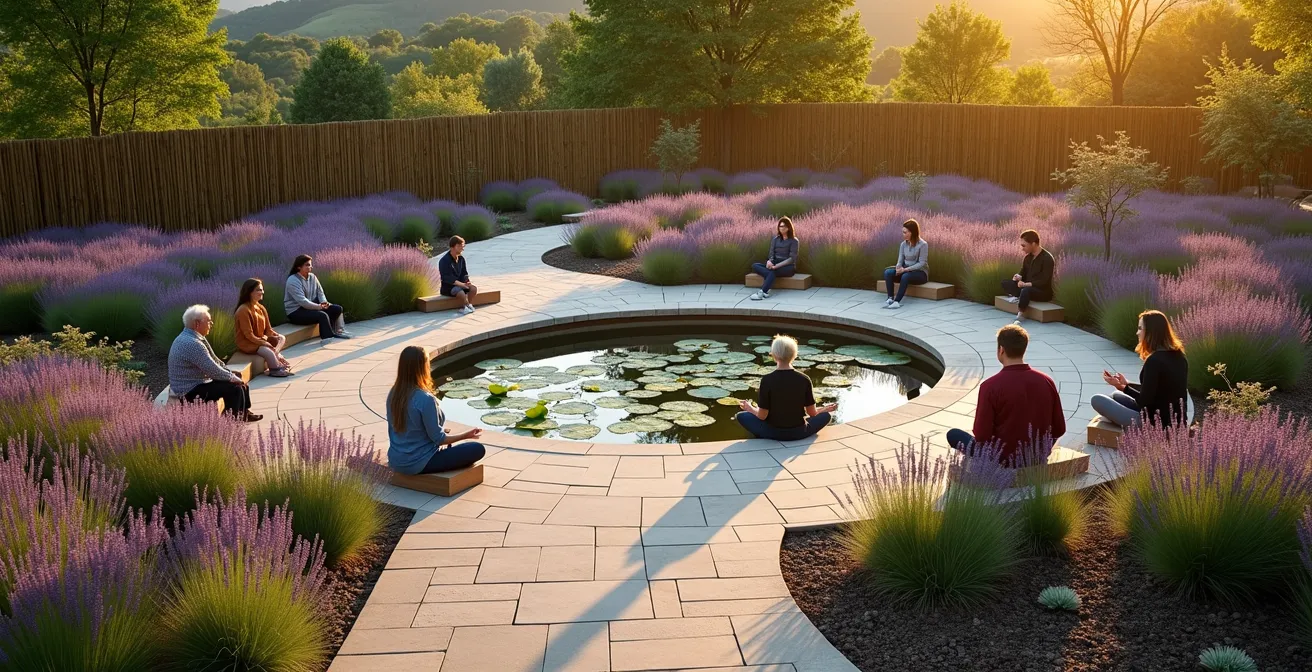
A sensory garden’s true power isn’t in its passive beauty, but in its active use as a tool to intentionally regulate your nervous system.
- Instead of just planting for the five senses, the goal is to create “sensory anchors” that ground you in the present moment and trigger a physiological calming response.
- Specific scents, textures, and even routine chores like weeding can be transformed into powerful mindfulness practices that measurably reduce stress hormones like cortisol.
Recommendation: Shift your mindset from building a “pretty” space to designing a therapeutic environment you can actively engage with for daily mental wellness.
In a world of constant digital noise and overwhelming pressure, the search for a genuine sanctuary has never been more urgent. Many of us feel a persistent, low-level hum of anxiety, a sense of being disconnected from ourselves and the world around us. The common advice is often to “get some fresh air” or “take up gardening,” but these suggestions can feel vague and unhelpful when you’re truly struggling. We’re told to plant things that look, smell, or sound nice, treating the garden like a static collection of pleasing objects.
But what if the true therapeutic power of a garden lies not in its passive beauty, but in our active interaction with it? What if we could design a space, no matter how small, that functions as an external regulator for our own nervous system? This is the core principle of horticultural therapy. It reframes the garden from a mere hobby into a dynamic, living environment designed for mental and emotional restoration. It’s about moving beyond simply planting lavender for its scent and instead learning how to use that scent as a conscious tool to lower cortisol levels.
This guide will walk you through the therapeutic design of a sensory garden from a horticultural therapist’s perspective. We will explore how to turn simple chores into mindfulness practices, which scents have the fastest calming effects, and why even a winter garden is a critical tool against seasonal despair. We will uncover the specific psychological and physiological mechanisms that make these spaces so powerful, providing you with the knowledge to create a true haven for your mental well-being.
This article provides a structured path to understanding and creating your own therapeutic space. The following sections will guide you through each essential element, from individual practices to community-level benefits, helping you cultivate a garden that nurtures your mind as much as your plants.
Summary: A Therapeutic Guide to Designing Your Sensory Garden
- Weeding as Meditation: How to Turn Chores Into a Mindfulness Practice?
- Lavender or Jasmine: Which Scent Lowers Cortisol Levels Faster?
- Why Winter Gardens Are Critical for Fighting Seasonal Affective Disorder?
- The Isolation Mistake: How Allotment Gardening Cures Loneliness
- 20 Minutes or 2 Hours: What Is the Minimum Dose of Nature for Mental Health?
- How to Layer Plant Textures to Create a Calming Sensory Experience?
- Why Community Gardens Reduce Neighborhood Crime Rates?
- Why Vibrant Biophilic Spaces Improve Mental Health in Urban Apartments?
Weeding as Meditation: How to Turn Chores Into a Mindfulness Practice?
For many, weeding is the most dreaded garden chore—a tedious, back-breaking task. From a therapeutic perspective, however, it presents a profound opportunity for mindfulness. The problem isn’t the chore itself, but our mindset towards it. We often approach it with resistance, focusing only on the end goal of a tidy bed. The secret to transforming this experience is to shift your focus from the outcome to the process, using the physical actions as a form of sensory anchoring.
Sensory anchoring is the practice of intentionally focusing your attention on a single sensory input to pull your mind away from anxious thoughts and ground it in the present moment. Instead of rushing, you treat each weed as an object of meditation. You feel the resistance of the root, hear the soft tear as it pulls from the earth, and smell the raw, loamy scent of disturbed soil. This isn’t about “thinking positive”; it’s a physiological practice. Research shows that just 20 minutes of nature interaction can significantly reduce levels of the stress hormone cortisol. By reframing a chore as a mindful practice, you are actively engaging in a restorative activity.
This approach turns a mindless task into a mindful ritual. It allows you to practice non-judgment, observing the “imperfect” weeds not as enemies, but simply as part of the garden’s natural cycle. This acceptance, known in Japanese aesthetics as wabi-sabi, is a powerful antidote to the perfectionism that often fuels anxiety.
Your Action Plan: Sensory Anchoring During Weeding
- Begin with Breath: Kneel in the garden and take five deep breaths, feeling the solidness of the earth beneath you as your primary point of contact.
- Focus on Sound: Isolate the specific sound of each root pulling free from the soil. Notice the difference between a snap, a tear, or a soft release.
- Notice Texture: Pay attention to the changing textures on your hands. Feel the difference between the dry, crumbly topsoil and the cool, damp earth below.
- Engage Scent: Consciously breathe in the earthy scent that is released when the soil is disturbed. This is the smell of geosmin, a compound known to have a calming effect.
- Observe Imperfection: Look closely at the weeds and imperfect leaves. See them as part of the natural beauty and cycle of life, practicing acceptance rather than resistance.
By applying these steps, you transform a mundane chore into a powerful, accessible form of meditation that calms the nervous system and cultivates a deeper connection with your garden.
Lavender or Jasmine: Which Scent Lowers Cortisol Levels Faster?
Scent is arguably the most powerful sense for triggering immediate emotional and physiological responses due to its direct link to the brain’s limbic system, which governs memory and emotion. While both lavender and jasmine are celebrated for their calming properties, they work in slightly different ways and are best used at different times to manage anxiety. It’s not just about which is “better,” but how you use them to intentionally scent-scape your day for nervous system regulation.
Lavender contains a compound called linalool, which has been studied for its anxiolytic (anxiety-reducing) effects. It works by calming the sympathetic nervous system—our “fight or flight” response. This makes it ideal for managing stress throughout the day, providing a sustained sense of calm. Jasmine, particularly when it releases its fragrance in the evening, has a sedative-like quality that is more effective at promoting relaxation and preparing the body for sleep. The choice isn’t lavender *or* jasmine; it’s lavender *for* the day and jasmine *for* the night.
The therapeutic impact of aromatic plants is well-documented. For instance, a study on post-surgery patients revealed that those with access to hospital sensory gardens featuring a variety of aromatic plants experienced significantly faster recovery times and required less pain medication. This demonstrates that a strategically scented environment does more than just “smell nice”—it actively supports the body’s healing and calming processes. The following table provides a framework for using scent therapeutically.
This macro photograph reveals the intricate source of lavender’s power: the tiny oil glands on its florets, glistening with morning dew. Visualizing this helps connect the abstract idea of “scent” to its physical, botanical origin, deepening our appreciation and mindful engagement.

As the image illustrates, the plant is a living pharmacy. To harness this, consider a schedule that provides the right aromatic cues at the right time. A structured approach ensures you are proactively managing your mental state rather than reactively dealing with stress.
| Time of Day | Recommended Scent | Delivery Method | Effect on Nervous System |
|---|---|---|---|
| Morning (6-9am) | Rosemary/Mint | Crushing fresh leaves | Increases focus, stimulates alertness |
| Midday (12-2pm) | Lavender | Passive diffusion from planted borders | Sustained stress reduction throughout day |
| Evening (6-9pm) | Jasmine/Honeysuckle | Natural evening fragrance release | Promotes relaxation, prepares for sleep |
Ultimately, the goal is to create a dynamic aromatic environment that supports your nervous system’s natural rhythms, offering stimulation when you need focus and calm when you need rest.
Why Winter Gardens Are Critical for Fighting Seasonal Affective Disorder?
When the days shorten and the landscape turns grey, it’s easy to feel a corresponding dip in mood. For those who experience Seasonal Affective Disorder (SAD), this is a serious annual challenge. The common impulse is to turn away from the garden, seeing it as dormant and lifeless. However, a well-designed winter garden is one of the most powerful tools for countering feelings of despair, acting as a source of light, structure, and hope.
First, a winter garden maximizes exposure to natural light. Plants with interesting bark like Red Twig Dogwood or the bright berries of Holly don’t just add color; they catch and reflect the low winter sun. Even on overcast days, the light they reflect contributes to our daily light intake. This is crucial, as studies show that viewing natural light reflected in garden elements can lead to a 3-5 point reduction in blood pressure, signaling a physiological calming response. Evergreen shrubs and ornamental grasses left standing provide structure and movement, preventing the landscape from feeling barren and empty.
Beyond the physiological effects of light, the winter garden offers a profound psychological benefit. It serves as a daily, tangible reminder that life persists even in the harshest conditions. As a WorldHealth.net mental health study noted in its research findings, this provides a powerful counter-narrative to feelings of hopelessness:
Winter gardens serve as tangible, daily visual cues that life persists and spring will return, countering feelings of despair.
– Research findings, WorldHealth.net Mental Health Study
Watching the first snowdrops or crocuses push through the frozen ground is not just a sign of spring; it’s a potent symbol of resilience. It teaches us on a deep, non-verbal level that dormancy is not death, and that periods of darkness are inevitably followed by a return to light and growth.
By intentionally designing for winter interest, you create a space that actively supports your mental well-being during the most challenging months of the year, transforming the garden into a year-round therapeutic ally.
The Isolation Mistake: How Allotment Gardening Cures Loneliness
Loneliness is a silent epidemic, and a common mistake is to believe it can be solved simply by being “around” other people. True connection requires a shared purpose and a sense of belonging. This is where allotment or community gardening offers a unique and powerful cure. It moves beyond passive social contact and fosters a deep, meaningful sense of collective efficacy—the shared belief that residents can work together to achieve common goals.
An allotment garden provides a natural, low-pressure context for social interaction. Unlike a forced social event, conversations happen organically over a shared task: swapping seeds, asking for advice on pests, or admiring a neighbor’s harvest. This shared purpose breaks down social barriers and builds trust. The garden becomes a “third place,” a neutral ground where intergenerational connections flourish. An experienced older gardener teaching a novice, or families working side-by-side, creates a web of informal support that combats isolation far more effectively than a simple social club.
This effect is especially pronounced for vulnerable populations. It’s been shown that sensory gardens help prevent the isolation that impairs quality of life for older adults. Furthermore, the impact extends beyond individual well-being to the community as a whole. A powerful study on healing gardens for recently returned veterans provides a clear example of this principle in action. The project didn’t just give veterans a place to go; it created an environment for building tangible skills and social bonds.
Case Study: Healing Gardens and Social Cohesion
Communities that created healing gardens for recently returned veterans saw a marked increase in social cohesion. The shared work and purpose fostered what sociologists call ‘collective efficacy’—the shared belief that residents can work together to solve local problems. This process directly addressed feelings of isolation among the veterans while simultaneously building crucial intergenerational connections within the broader community.
By participating in an allotment, you are not just growing vegetables; you are cultivating a network of care, mutual support, and shared identity that is fundamental to human well-being.
20 Minutes or 2 Hours: What Is the Minimum Dose of Nature for Mental Health?
One of the biggest barriers to improving mental wellness is the feeling that we don’t have enough time. The idea of spending hours in nature can feel like another item on an already overwhelming to-do list. The good news from a therapeutic standpoint is that the benefits of nature are not all-or-nothing. The concept of a “nature dose” suggests that small, consistent interactions with the natural world have a significant and cumulative effect on our mental health.
So, what is the minimum effective dose? While more is often better, scientific research points to a surprisingly accessible threshold. For instance, University of Texas research shows multi-sensory nature experiences can reduce cortisol by up to 21% in just 20 minutes. This “nature pill” can be taken in one sitting or, more realistically for busy lives, broken up into smaller “nature snacks” throughout the day.
This reframes our relationship with nature from a time-consuming excursion to a series of simple, mindful moments. It’s not about hiking for two hours, but about taking five minutes to walk barefoot on the grass, five minutes to mindfully water your houseplants, or simply five minutes to sit on a bench and observe the movement of leaves in the wind. The key is the quality and intentionality of the attention, not the duration.
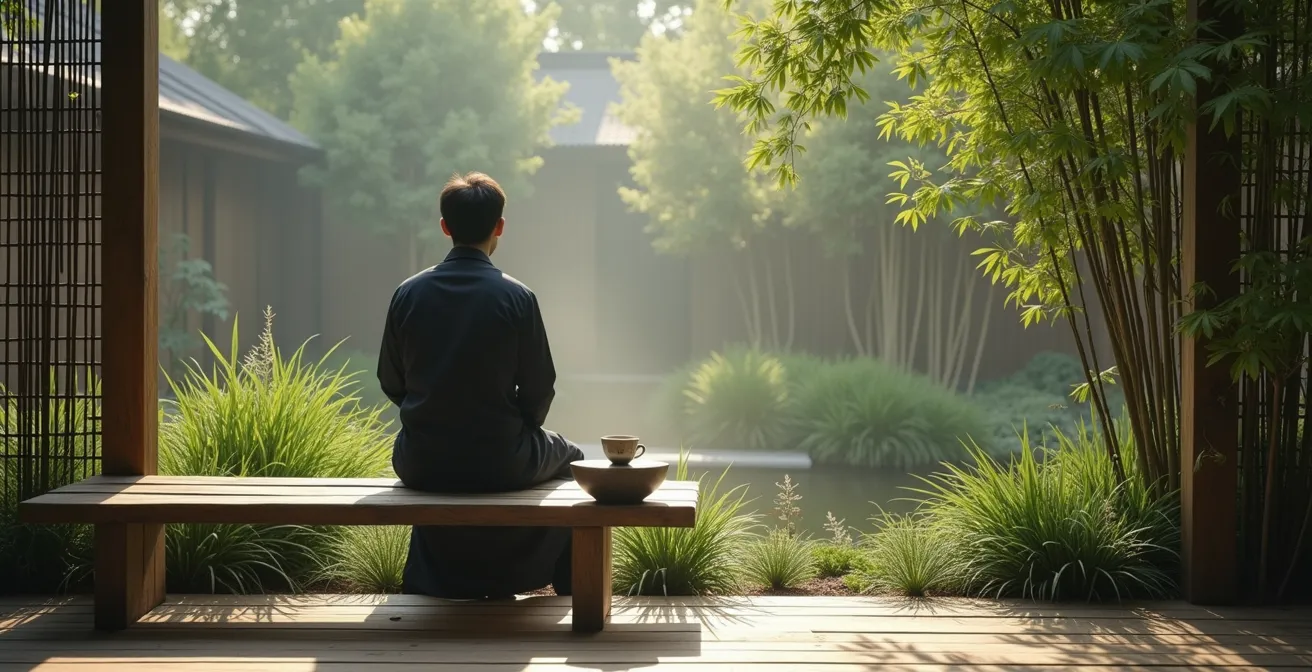
This practice of “nature micro-dosing” makes the benefits of horticultural therapy accessible to everyone, regardless of their schedule or access to large green spaces. The goal is to weave these small sensory anchors into the fabric of your daily routine. Here is a simple schedule to get you started:
- Morning: Spend 5 minutes observing a houseplant while you have your coffee. Notice the details: a new leaf unfurling, the pattern of veins, the texture of the soil.
- Lunch: Take a 5-minute break to walk barefoot on a patch of grass or touch the textured leaves of a nearby plant. Focus entirely on the physical sensation.
- Evening: Dedicate 5-10 minutes to watering your plants mindfully. Pay attention to the sound of the water, the change in the soil’s color, and the scent it releases.
By consistently taking these small nature doses, you can effectively lower stress levels and boost your mental well-being without needing to overhaul your entire schedule.
How to Layer Plant Textures to Create a Calming Sensory Experience?
While scent and color are often the stars of the sensory garden, texture provides a unique and profound pathway to calming the nervous system. Touch is our first and most fundamental sense, and engaging it mindfully can directly trigger a parasympathetic response—the body’s “rest and digest” state. The secret to a therapeutically textured garden is layering, creating a rich tactile tapestry that invites exploration and promotes a state of calm curiosity.
Layering textures involves combining plants with contrasting tactile qualities to create a dynamic sensory experience. Imagine a pathway lined with the velvety leaves of Lamb’s Ear (Stachys byzantina), which begs to be touched, placed next to the smooth, cool surfaces of succulents. This contrast heightens your sensory awareness. Then, you might incorporate the complex, rigid flower heads of Sea Holly (Eryngium) to promote focus, and the gentle, rustling movement of ornamental grasses to provide soft, ambient stimulation.
This approach has proven benefits, particularly for individuals experiencing anxiety or cognitive challenges. A compelling study published in the Journal of Clinical Nursing focused on elderly dementia residents. It found that those who regularly interacted with sensory gardens featuring a rich variety of textures showed significantly reduced agitation and an improved overall mood. The act of touching different surfaces often triggered positive memories and provided a non-verbal outlet for communication and connection.
Study: The Power of Touch in Dementia Care
In a study focusing on dementia care, residents were given regular access to a sensory garden designed with highly textural plants like soft lamb’s ear, smooth bamboo canes, and feathery ornamental grasses. Researchers observed that the simple act of tactile exploration led to a significant reduction in agitation and other challenging behaviors. For many residents, touching these varied plant textures appeared to ground them in the present and even trigger positive, long-dormant memories, demonstrating the deep link between touch and emotional well-being.
To design for this effect, place soft, inviting textures at hand-level along paths and in raised beds. Use grounding textures like smooth stones in seating areas, and place more complex, intriguing textures in “discovery zones” to encourage mindful exploration. The following table provides a starting point for layering textures to calm the nervous system.
| Texture Type | Example Plants | Sensory Effect | Placement |
|---|---|---|---|
| Soft/Fuzzy | Lamb’s Ear, Dusty Miller | Triggers calming parasympathetic response | Hand-level along paths |
| Smooth/Cool | Succulents, Smooth stones | Grounding, reduces anxiety | Raised beds, touch zones |
| Complex/Rigid | Eryngium, Rough bark | Promotes focus and curiosity | Discovery areas |
| Movement/Sound | Ornamental grasses, Bamboo | Gentle stimulation, mindfulness | Border plantings, screens |
By thoughtfully layering textures, you create a non-verbal dialogue with the body, offering a rich and grounding experience that can soothe anxiety and promote a deep sense of peace.
Why Community Gardens Reduce Neighborhood Crime Rates?
The connection between green spaces and lower crime rates might seem tenuous at first, but the underlying mechanism is a powerful social principle. Community gardens reduce crime not just because they are beautiful, but because they foster a critical element of safe communities: natural surveillance by engaged residents. This concept, famously articulated by urbanist Jane Jacobs as “eyes on the street,” is the most effective deterrent to illicit activity.
An empty, neglected lot invites undesirable behavior because no one is watching and, more importantly, no one cares. A thriving community garden completely transforms this dynamic. It becomes a hub of positive activity at all hours of the day. There are early risers watering their plots, families tending to vegetables in the afternoon, and neighbors chatting in the evening. This constant, legitimate presence sends a clear signal that the space is valued and monitored by the community.
This principle is about more than just surveillance; it’s about ownership and care. A study on therapeutic garden design explains this dynamic perfectly, applying Jane Jacobs’ foundational theory to green spaces:
A well-used community garden increases the presence of engaged residents at various times of day. This natural surveillance by people who care about the space acts as a powerful deterrent to criminal behavior.
– Jane Jacobs’ Theory Application, Therapeutic Garden Design for Communities
Furthermore, these gardens build the social fabric that prevents crime in the first place. They nurture what is known as collective efficacy. As research on sensory gardens notes, they serve as gathering places where knowledge sharing between generations naturally fosters increased collective efficacy. This shared sense of capability and mutual trust empowers residents to work together to maintain a safe and supportive environment, addressing problems before they escalate.

This image captures the essence of a community garden’s power: it’s a place of connection, shared purpose, and intergenerational care—the very building blocks of a safe and resilient neighborhood.
By transforming neglected spaces into centers of positive human activity, community gardens do more than grow food; they cultivate safety, connection, and a shared sense of pride.
Key takeaways
- A sensory garden is an active tool for regulating your nervous system, not a passive collection of plants.
- Small, consistent “nature doses” (5-20 minutes) are scientifically proven to reduce stress hormones like cortisol.
- Transforming chores like weeding into mindful “sensory anchoring” practices is a powerful, accessible form of meditation.
Why Vibrant Biophilic Spaces Improve Mental Health in Urban Apartments?
For city dwellers, a sprawling garden is often an unattainable luxury. However, the profound mental health benefits of nature can be cultivated even within the four walls of an apartment through the principles of biophilic design. This is the practice of incorporating nature and natural patterns into the built environment to satisfy our innate human need for connection to the living world. It’s about creating a vibrant indoor ecosystem that actively calms the mind and reduces stress.
The core idea is to mimic the restorative cues of a natural environment. Our brains are hardwired to feel safe and relaxed in certain settings. Research in biophilic design demonstrates that exposure to green spaces reduces cortisol levels, and this effect can be replicated indoors. It’s not just about having a few pots on a windowsill; it’s about creating an immersive experience using three key pillars of biophilic design.
First is direct nature: bringing actual living plants inside, especially those with high fractal density like ferns, whose repeating patterns are inherently soothing to the human eye. Second are natural analogs: using materials, textures, and patterns that mimic nature, such as wood grain furniture, botanical prints, or stone-textured objects. The third, and perhaps most crucial for small spaces, is manipulating the nature of space. This involves using tall plants to create cozy, protected corners that provide a sense of “prospect and refuge”—a safe place from which to look out onto your living area. This simple act taps into a primal sense of security.
You can transform an apartment into a restorative sanctuary by applying these principles. The goal is to create a multi-sensory environment that offers the psychological comforts of the natural world.
- Create Refuge: Use a tall plant like a Fiddle Leaf Fig or a hanging Pothos to create a cozy reading corner, providing a sense of enclosure and safety.
- Incorporate Fractals: Position plants with clear fractal patterns, such as ferns or even a Romanesco broccoli on the kitchen counter, as visual anchors that your eyes can rest on for effortless restoration.
- Play with Light: Use plants with delicate leaves, like a Parlor Palm, to filter harsh light from a window, creating dappled shadows that mimic the calming effect of a forest canopy.
- Use Natural Materials: Combine your plants with natural analogs like wooden shelves, terracotta pots, and wool or linen textiles to create a cohesive, earthy palette.
By thoughtfully integrating these biophilic cues, you can transform any urban apartment from a sterile box into a vibrant, living sanctuary that supports your mental health every day.