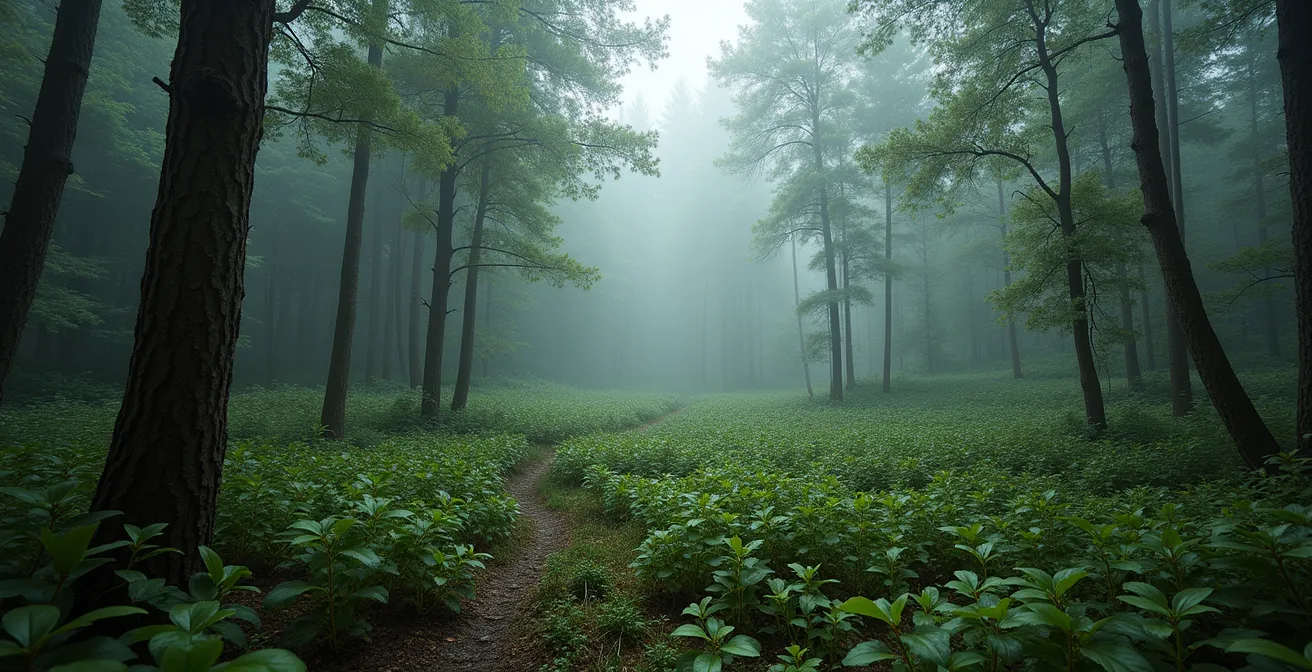
Your property isn’t sick; it’s occupied territory. The conventional advice of simple cutting and planting is doomed to fail because it treats a war like a gardening project. To truly reclaim land choked by invasive vines, you must adopt a military doctrine: systematically deplete the enemy’s resources, seize and hold ground, and deploy native forces with strategic precision. This is a campaign, and this is your field manual.
You stand at the edge of the property, and it’s not a landscape you see, but a battlefield lost. A monolithic green tide of Kudzu, English Ivy, or some other relentless vine has swallowed everything—trees are suffocating ghosts, fences have vanished, and the very contours of the land are gone. It’s a daunting, demoralizing sight that makes most people throw up their hands or reach for the most scorched-earth chemical they can find. The common advice feels feeble: trim a little here, plant a native there. This is a fundamental misunderstanding of the enemy.
You are not dealing with a simple weed problem. You are facing a hostile occupying force with a massive, entrenched logistical network underground in its root system. To fight it, you need to stop thinking like a gardener and start thinking like a general. This requires a strategic doctrine focused on exploiting the enemy’s weaknesses, disrupting its supply lines, and executing a multi-phase counter-offensive. It’s a war of attrition, intelligence, and logistics, not one of brute force alone.
This guide lays out that doctrine. We will move beyond simplistic tips and into the strategy of ecological warfare. You will learn how to time your attacks to drain root energy reserves, how to choose the right tools for stabilizing your recaptured territory, and how to deploy a native “army” that can outcompete and suppress any returning invaders for good. Forget what you think you know about weeding; it’s time to plan your campaign and take your land back.
This article details the strategic phases of that campaign. Each section acts as a briefing on a critical tactic, from initial ground stabilization to long-term suppression, guiding you through the complexities of ecological restoration.
Summary: How to Rehabilitate Degraded Ecosystems Overrun by Invasive Vines?
- Jute Netting or Coir Logs: Which Stabilizes Slopes During Restoration?
- How to Use Plastic Sheeting to Kill Weed Seed Banks Without Chemicals?
- Seeds or Plugs: Which Method Competes Better Against Weed Regrowth?
- The “Green Blur” Mistake: Confusing Weed Return for Native Recovery
- When to Cut Invasive Cane to Deplete Root Energy Reserves?
- The Groundcover Mistake That Takes Over Your Lawn in One Season
- Why Water Pooling Near Your Foundation Threatens Structural Integrity?
- How to Limit Synthetic Chemicals Without Losing the War on Weeds?
Jute Netting or Coir Logs: Which Stabilizes Slopes During Restoration?
Before you can fight the enemy, you must secure your foothold. On a degraded slope, your primary front is the soil itself. Erosion is the enemy’s ally, washing away your progress. Choosing your stabilization material is not a matter of aesthetics; it’s a strategic choice about logistical support. Jute netting and coir logs are not blankets; they are your initial fortifications, each suited for a different mission timeline and battlefield condition.
Jute netting is your short-term tactical team. It’s best for low-grade slopes where you expect your native “pioneer” species to establish roots and take over defensive duties quickly, typically within a single growing season. Coir logs, on the other hand, are your heavy-duty combat engineers. These dense, fibrous logs provide a multi-year structural defense, making them essential for steeper slopes or areas subject to concentrated water flow. High-density coir is the special forces of stabilization, deployed in the most critical, high-flow zones where failure is not an option. The choice depends entirely on a sober assessment of the terrain’s vulnerability.
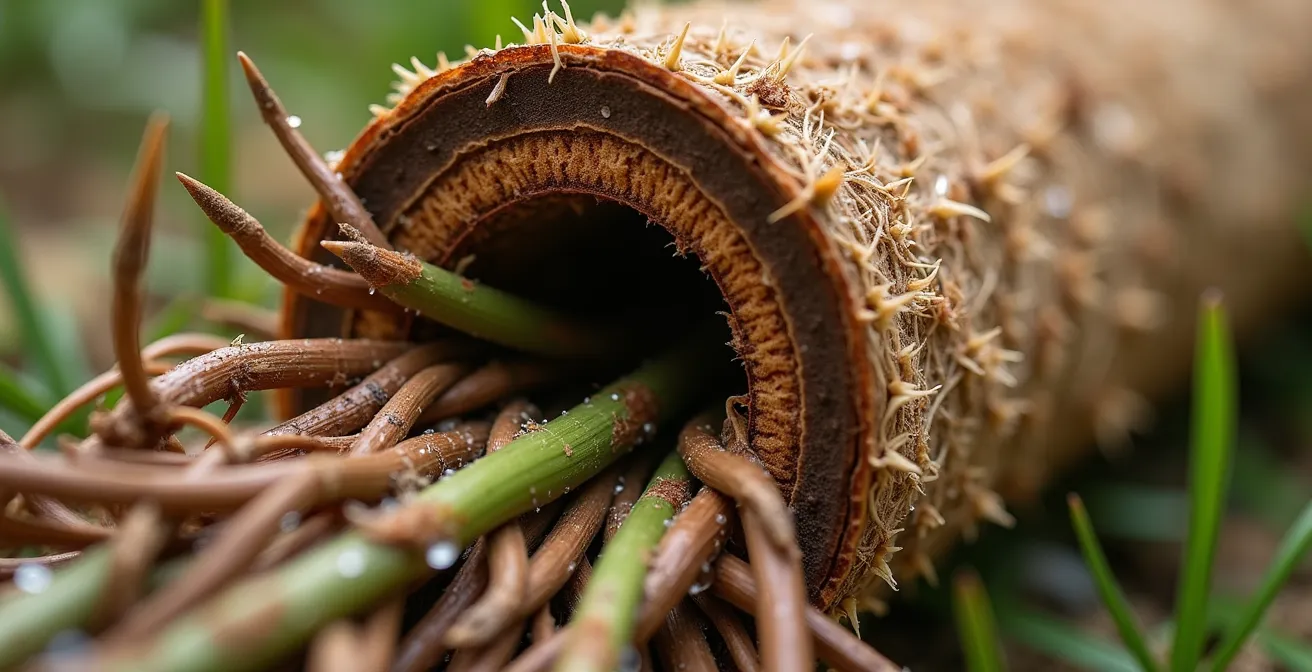
As the image shows, these are not passive materials. They are integrated bio-structural systems. The coir log is the bunker, but the live stakes of native plants driven through it are the soldiers who will eventually grow to form an unbreakable living wall. Your decision must be based on how long you need these fortifications to hold the line before your vegetative army is strong enough to control the territory on its own.
This decision matrix outlines the operational parameters for deploying these materials. Analyze it not as a shopping list, but as a military procurement guide to match the equipment to the mission.
| Material | Slope Grade | Longevity | Cost Range | Best Use Case |
|---|---|---|---|---|
| Jute Netting | Up to 3:1 | 6-12 months | $0.15-0.25/sq ft | Short-term projects with quick vegetation establishment |
| Standard Coir Logs | Up to 2:1 | 2-5 years | $15-25/linear ft | Moderate erosion areas needing medium-term support |
| High-Density Coir | Up to 1:1 | 4-7 years | $25-40/linear ft | High-flow areas, harsh conditions requiring long-term stability |
| Coir/Jute Blanket | Up to 1:1 | 18-24 months | $0.35-0.50/sq ft | Steep slopes with high stormwater flows |
How to Use Plastic Sheeting to Kill Weed Seed Banks Without Chemicals?
Once you’ve cleared the primary invaders, the war is not over. The soil is now a minefield, saturated with a “seed bank”—a dormant army of millions of weed seeds waiting for the first ray of light to launch a new invasion. Attacking this seed bank is a critical siege tactic. Plastic sheeting offers two distinct strategies for this: solarization and occultation. Choosing the wrong one for your situation is a tactical blunder.
Solarization, using clear plastic, is a scorched-earth policy. It heats the soil to temperatures that “cook” and kill seeds and pathogens in the top few inches. This is a fast, aggressive maneuver best used in the peak heat of summer in sunny locations. However, this indiscriminate attack also decimates beneficial soil life, leaving you with sterile ground that needs to be carefully re-inoculated before your native troops can thrive. It’s a high-impact, high-risk strategy.
Occultation, using black plastic, is a starvation blockade. It works by blocking all light, preventing seeds from germinating and exhausting the energy reserves of any small plants that do sprout. This method is slower, often taking several months, but it is far gentler on the soil microbiome. It preserves the soil structure and organisms that your native plants will need to establish a strong defensive line. This is the preferred strategy for maintaining the long-term health of your territory.
Field studies confirm this strategic difference: early intervention by simply removing vines can work if the forest canopy is intact. But once the canopy is gone, the site becomes too sunny for forest specialists. You must shift tactics to establishing a native meadow. Solarization might clear the field, but occultation better prepares it for this new mission. After the siege, you must immediately begin rebuilding the ecosystem with a clear protocol to restore soil health and prevent a vacuum the enemy can exploit.
- Week 1 Post-Sheeting: Apply compost at a 2-3 inch depth to reintroduce beneficial organisms.
- Week 2: Inoculate with mycorrhizal fungi (5-10g per square meter) during cool morning hours to build the new logistical network for your plants.
- Week 3: Apply compost tea weekly for the first month to accelerate microbial recolonization.
- Week 4-8: Deploy your native forces by planting competitive perennials to occupy the territory.
- Month 3+: Patrol the borders, maintaining a 2-foot mulched buffer zone to repel incursions.
Seeds or Plugs: Which Method Competes Better Against Weed Regrowth?
With the ground secured and the seed bank depleted, it’s time to deploy your native army. Your choice of deployment method—high-density seeding versus planting established plugs—is a pivotal strategic decision that will determine the speed of canopy closure and your ability to suppress enemy regrowth. This is not about planting; it’s about deploying troops in a way that achieves territorial dominance as quickly as possible. Research on competitive planting shows that a healthy native plant cover reduces invasive re-establishment opportunities by up to 85%.
High-density seeding is like deploying a vast infantry of fast-moving pioneers. It’s cost-effective and excellent for covering large areas quickly. The goal is to create a “green mulch” of fast-growing native grasses and wildflowers that blanket the soil, shade out emerging weeds, and begin the process of soil building. This is your first wave, designed to take and hold ground.
Planting plugs is like deploying specialized, veteran units. Plugs are more expensive upfront but have a higher survival rate and established root systems. They are your core troops, the long-lived perennials, shrubs, and trees that will form the backbone of the future ecosystem. A dense matrix of plugs can achieve canopy closure the fastest but at a significant cost. Modern restoration strategy, as one expert notes, must rebuild functional ecosystems, not perfect historical replicas. This often means a phased deployment: use a high-density seed mix in Year 1 to suppress weeds, then strategically insert plugs of climax species into that established native matrix in the following years.
The decision comes down to logistics: budget, labor, and the time required to achieve “canopy closure”—the point at which your native plant leaves overlap, shutting off light to the ground and effectively ending the weed threat.
| Method | Initial Cost/Acre | Time to Canopy Closure | Weeding Labor Year 1 | 5-Year Total Cost |
|---|---|---|---|---|
| High-Density Seeding | $800-1,200 | 18-24 months | 40-60 hours | $3,000-4,000 |
| Standard Plug Spacing (6ft) | $3,000-4,500 | 36-48 months | 80-120 hours | $7,000-9,000 |
| Dense Plug Matrix (3ft) | $6,000-8,000 | 12-18 months | 20-30 hours | $7,500-9,500 |
| Nurse Crop + Plugs Combo | $2,500-3,500 | 12-24 months | 30-40 hours | $4,500-5,500 |
The “Green Blur” Mistake: Confusing Weed Return for Native Recovery
In the chaotic months after your initial assault, the battlefield will be a confusing “green blur” of new growth. This is the moment of greatest vulnerability to a common and fatal error: misidentifying enemy scouts for your own returning troops. Pulling up a native seedling you mistake for a weed is a self-inflicted wound. Allowing a patch of invasive regrowth to establish because you thought it was a “pioneer” species is to cede hard-won territory. Battlefield reconnaissance is not optional; it is a core discipline.
You cannot rely on memory alone. You must establish a systematic, “living ID system” on the ground to make identification swift and certain. This is your field intelligence network. As the Chesapeake Climate Action Network wisely advises in their guide, you need to be certain before you act. Their rule is simple and absolute.
Getting certified as a Weed Warrior is a great way to learn how to identify invasives – if you don’t know what the vine is, don’t cut it!
– Chesapeake Climate Action Network, Learn How To Remove Invasive Vines Guide
This principle of positive identification is paramount. To implement it, you must move beyond guessing and create a clear, visual system on your property. Your goal is to make the “friend or foe” decision instantly, removing any ambiguity that could lead to tactical errors during mopping-up operations.
Action Plan: Establish a Field Identification System
- Geometric Planting: Plant your native forces in deliberate, recognizable patterns. Use triangular groupings for shrubs and linear “drifts” for grasses, breaking the random chaos of nature.
- Color-Coded Flags: Deploy a simple flagging system during patrols: blue for confirmed native seedlings, orange for unidentified targets needing verification, and red for confirmed hostiles marked for termination.
- Reference Plots: Establish small, 3×3 ft “training grounds” where you plant and label known native species. These serve as your visual reference to compare against unknown sprouts elsewhere.
- Photo Monitoring Points: Drive permanent stakes into the ground at key locations. Take photos from these exact points monthly to create a time-lapse record of the changing battlefield, making it easier to spot new incursions.
- Phenology Calendar: Keep an intelligence log. Document the emergence dates, flowering times, and growth habits of both your native army and the common invasive enemies in your region. This helps you anticipate their moves.
When to Cut Invasive Cane to Deplete Root Energy Reserves?
To defeat a vine-like Kudzu, you must understand its logistics. This is not a plant; it’s a biomass factory with a colossal underground supply depot. Simply cutting the vine is like trimming a soldier’s hair; it’s a minor annoyance. The real target is the root system’s energy reserves. Resource Depletion Warfare is the strategy of timing your attacks to force the enemy to drain its own batteries, leading to its eventual collapse.
Understanding the incredible growth rate of these invaders reveals the scale of the challenge. According to research from the University of Maryland, some varieties like Kudzu can grow 1 foot per day and 60 feet in a season, supported by root systems weighing up to 400 pounds. This is the subterranean fortress you are up against. A single, poorly-timed cut is a waste of effort. The plant will simply draw from its vast reserves and regrow with vigor.

The key is to strike when the plant is most vulnerable. The “double-cut” method is a classic maneuver in this war of attrition. It’s a one-two punch designed to maximize energy drain.
- The First Cut (Post-Flowering): The initial attack comes after the plant has expended a massive amount of energy producing flowers and seeds. Cutting it to the ground at this point prevents it from reproducing and forces it to use its precious root reserves to fund new leaf growth.
- The Second Cut (Late Summer): As the plant pushes out new growth, it works all summer to photosynthesize and replenish its depleted root reserves. The second, decisive strike comes in late summer, just as the plant begins to transfer that newly created energy back down to the roots for winter dormancy. Cutting it then severs the supply line, leaving the root system starved and weakened heading into winter.
This isn’t a one-time operation. As field studies show, control methods like cutting must continue for two seasons or more to fully exhaust the enemy’s logistical chain. This is a persistent, disciplined campaign. Each cut is a calculated blow against the enemy’s ability to wage war next season.
The Groundcover Mistake That Takes Over Your Lawn in One Season
In your zeal to deploy native troops, there’s a significant risk of “friendly fire.” Some native groundcovers are so aggressive, so effective at colonizing territory, that they can become a new monoculture—a “green concrete” that chokes out the very diversity you aim to foster. They are the zealous allies who, left unchecked, take over the entire campaign. This is a classic rookie mistake: solving one problem by creating another.
The goal of restoration is not to simply replace one dominant species with another. It’s to build a resilient, multi-layered community of plants. Many restoration sites are former lawns or fields with no intact local gene pool left. On these degraded battlefields, applying “museum level rules” about what ‘should’ be there is a recipe for failure. The mission is to rebuild a functional ecosystem. Therefore, your troop selection and deployment must be strategic to encourage diversity, not just ground cover.
An overly aggressive groundcover, even a native one, can form a dense mat of surface roots that prevents other species, including the seedlings of native shrubs and trees, from ever getting a foothold. To prevent this, you must think in terms of polyculture and succession. Your groundcover layer is the first wave, but it must be designed to allow the second and third waves (bunch grasses, shrubs, trees) to land and establish themselves.
Follow these tactical guidelines to prevent your groundcover from becoming the new enemy:
- Select for Compatibility: Choose groundcover species known to “play well with others.” Avoid those that form impenetrable, mat-like root systems.
- Plant in Drifts, Not Masses: Instead of covering 100% of the ground, plant in flowing groups or “drifts,” leaving at least 30% open space between them. This gives other species a place to germinate.
- Incorporate Vertical Layers: From the beginning, inter-plant your groundcovers with other forms, like upright bunch grasses and small shrubs. This creates structural diversity from day one.
- Monitor and Redirect: During the first season, patrol the area monthly. Physically redirect the runners of spreading groundcovers to prevent them from overrunning open spaces or smaller plants before they’re established.
- Plan for Succession: Use fast-spreading groundcovers as a “nurse crop” to stabilize the soil, but have a plan to introduce slower-growing, more permanent species into the community once the initial stability is achieved.
Why Water Pooling Near Your Foundation Threatens Structural Integrity?
An invasive vine infestation does more than just smother trees; it fundamentally degrades the “foundation” of your entire ecosystem: the soil. The thick, tangled mat of vines intercepts rainfall, causing it to run off the surface instead of infiltrating the ground. This leads to massive soil erosion, stripping away valuable topsoil and nutrients. Over time, the soil structure collapses. This ecosystem-level failure is a direct parallel to how water pooling around a house foundation threatens its structural integrity.
When soil loses its structure, it can no longer support life or manage water. Compaction prevents deep root penetration, and the sheer weight of vine mats on slopes can trigger landslides. The loss of this foundational integrity creates a death spiral, making the land even more hospitable to invasive species and less able to support a native recovery. The threat is not just biological; it’s geological. This damage is part of the staggering economic cost of inaction; across the United States, the structural threat to ecosystems parallels foundation damage, with invasive species costing an estimated $120 billion annually.
Rebuilding this foundation is a work of bioengineering. It requires deploying specific tactics to counteract the damage done by the invaders and restore the land’s ability to manage water and support life. Your mission is not just to replant, but to reconstruct the very structure of the battlefield itself.
| Problem | Ecosystem Impact | Solution | Implementation |
|---|---|---|---|
| Surface Water Runoff | Soil erosion, nutrient loss | Swales & Terraces | Create depressions perpendicular to the slope to catch and hold water. |
| Compacted Soil | Prevents water infiltration | Deep-rooted Natives | Plant prairie species with 10-15ft deep roots to break up compaction. |
| Vine Mat Weight | Slope failure, tree toppling | Rain Gardens | Excavate and plant a basin at the slope base to capture runoff. |
| Loss of Soil Structure | Foundation-like failure | Bioengineering | Combine coir logs with live stakes of willows or dogwoods. |
Key Takeaways
- Adopt a Warfare Mindset: Stop treating restoration like gardening. Success requires strategic planning, resource depletion, and territorial control.
- Timing is Everything: Attack invasive root reserves when they are most vulnerable—typically after flowering and in late summer—to maximize energy drain.
- Control the Ground: Use a phased approach. First, stabilize soil and eliminate the seed bank. Then, deploy a dense army of competitive native plants to achieve canopy closure and suppress regrowth.
How to Limit Synthetic Chemicals Without Losing the War on Weeds?
In this war, synthetic herbicides are a powerful weapon, but they are not a strategy. Over-reliance on them is like calling in an airstrike for every problem; it’s indiscriminate, causes significant collateral damage to your own forces (beneficial insects and soil life), and is ultimately unsustainable. A true strategist knows when to use such a weapon and, more importantly, when not to. The goal is to win the war, not just a single battle, and that requires an Integrated Pest Management (IPM) approach—an “integrated arms” doctrine.
IPM is a hierarchy of tactics, from the least to the most intensive. It provides a disciplined framework for making control decisions, ensuring you always use the lowest-force option necessary to achieve your objective. This is about being strategic and precise, not dogmatic. As one restoration expert puts it, the ultimate measure of success is function, not purity.
Restoration succeeds or fails based on function, not paperwork. Wildlife responds to cover, food, and structure – they do not care about floristic purity.
– Native Plant Ecosystems, Restoration in a Changed World
This pragmatic philosophy is the heart of IPM. The pyramid structure guides your campaign, starting with the most fundamental and proactive tactics.
- Level 1 (Prevention): The foundation of all strategy. This is about creating conditions favorable to your forces—building healthy soil and choosing competitive native plants that can defend their own territory.
- Level 2 (Cultural Controls): Adjusting the battlefield conditions. This includes improving drainage and adjusting soil pH to favor natives over invaders.
- Level 3 (Physical/Mechanical Controls): Direct action. This is the hand-to-hand combat of hand-pulling, the resource depletion warfare of timed cutting, and the siege tactics of solarization.
- Level 4 (Biological Controls): Specialized troops. In some cases, you can introduce highly specific predators, like the Air Potato Leaf Beetle for Air Potato vine, to target the enemy.
- Level 5 (Targeted Chemical): The surgical strike. This is the last resort. When used, it must be with precision. The “cut-and-daub” method, where a cut vine stem is immediately painted with a concentrated herbicide solution, is the epitome of this. It reduces herbicide use by over 99% compared to foliar spraying and delivers the payload directly to the enemy’s command center: the root system.
Your property is reclaimable. It requires persistence, strategy, and the will to see the campaign through to the end. The first step is to stop reacting and start planning. Develop your battle plan today, starting with the foundational tactics of securing your territory.