Outdoor plants & Garden
Creating a thriving outdoor garden involves far more than simply placing plants in the ground and hoping for the best. Whether you’re cultivating a lush ornamental landscape, growing your own food in containers, or designing a pollinator haven, success depends on understanding the fundamental relationships between soil, climate, plants, and the living ecosystem around them. The difference between a struggling garden and a flourishing one often comes down to mastering a few core principles that work with nature rather than against it.
This comprehensive resource explores the essential elements of outdoor gardening, from engineering the perfect growing substrate to navigating your specific climate constraints, from balancing plant nutrition to supporting beneficial wildlife. By understanding these interconnected systems, you’ll gain the confidence to make informed decisions that lead to healthier plants, better yields, and a more resilient garden that requires less intervention over time.
Building the Foundation: Soil Health and Preparation
The quality of your soil determines approximately 80% of your garden’s potential, making it the single most important factor in plant success. Yet soil isn’t simply “dirt”—it’s a living, breathing ecosystem that requires careful preparation and ongoing attention. The foundation you build below ground directly translates to what you see above it.
Understanding Your Soil Type and Organic Matter
Most gardens begin with one of three base soil types: sandy (drains quickly but holds few nutrients), clay (retains water but resists root penetration), or loam (the ideal balance). The transformation from problematic soil to productive growing medium happens through the incorporation of organic matter—the decomposed remains of once-living materials. As this material breaks down, it creates humus, which acts like a sponge to hold both moisture and nutrients while improving soil structure.
Think of organic matter as the currency of soil health. Fresh materials like grass clippings provide quick nitrogen but disappear rapidly, while aged compost offers long-term structure. The breakdown process follows a predictable sequence: fresh material attracts bacteria, which multiply and die, feeding fungi, which create the sticky compounds that bind soil particles together. This process takes time—typically several months to a year—which is why patience in soil preparation pays exponential dividends.
Amending Challenging Soils
Heavy clay soils present particular challenges, compacting easily and drowning roots during wet periods while cracking hard during drought. The traditional solution involves breaking up clay structure with gypsum (calcium sulfate), which causes clay particles to flocculate—clumping together to create larger aggregates with air spaces between them. Unlike lime, gypsum doesn’t alter pH, making it safe for most garden applications.
Beyond gypsum, several amendments offer specific benefits:
- Biochar: This stable form of charcoal persists in soil for centuries, holding nutrients and water while providing habitat for beneficial microorganisms
- Rock dust: Slowly releases trace minerals over years, particularly valuable in long-term perennial plantings
- Aged animal manure: Provides both organic matter and nutrients, but must be properly composted for at least six months to kill pathogens and weed seeds
- Peat alternatives: Coconut coir, composted bark, or leaf mold offer similar water retention without depleting endangered peat bogs
The sequencing of soil preparation matters tremendously. Amendments work best when incorporated in fall, allowing winter freeze-thaw cycles to help break up clods and begin the decomposition process before spring planting.
Optimizing Plant Nutrition for Peak Performance
While healthy soil provides a baseline of nutrition, understanding the specific dietary needs of your plants allows you to fine-tune their performance. The familiar N-P-K ratio printed on every fertilizer package represents a balancing act that changes throughout the growing season and varies dramatically between plant types.
The Nitrogen-Phosphorus-Potassium Balance
Nitrogen (N) drives leafy green growth and is the nutrient most commonly deficient in gardens. It’s also the most mobile, washing away with rain or irrigation. Leafy crops like lettuce and cabbage demand high nitrogen, while fruiting plants need it moderated to prevent all foliage and no production. Organic sources include blood meal (fast-acting), alfalfa meal (moderate), and aged compost (slow-release).
Phosphorus (P) powers root development, flowering, and fruit formation. Unlike nitrogen, it binds tightly to soil particles and rarely leaches, but also moves very slowly through soil. This immobility means phosphorus must be placed where roots will encounter it—which is why it’s often incorporated into planting holes. Bone meal and rock phosphate serve as organic sources, though rock phosphate requires acidic conditions to become available to plants.
Potassium (K) regulates water movement, strengthens cell walls, and improves disease resistance. Deficiency symptoms often appear as scorched leaf edges or weak stems that lodge easily. Potassium demand spikes during fruit development and before winter dormancy. Kelp meal and wood ash (use sparingly—it’s highly alkaline) provide organic potassium.
Synthetic Versus Organic Delivery Systems
The debate between synthetic and organic fertilizers centers on delivery speed versus soil health. Synthetic formulations provide precisely calibrated ratios of immediately available nutrients—think of them as intravenous feeding. Plants respond within days, making them valuable for correcting acute deficiencies. However, they bypass the soil food web entirely and can lead to fertilizer burn if overapplied, as salt concentrations spike dangerously.
Organic fertilizers require biological activity to release their nutrients, creating a buffer against overfeeding while simultaneously feeding soil organisms. The trade-off is slower response time and less precise nutrient ratios. Many experienced gardeners use a hybrid approach: organic amendments for baseline fertility with targeted synthetic supplements for heavy feeders or deficiency correction.
Adapting to Your Climate and Growing Conditions
Climate exerts an iron grip on what you can successfully grow, yet within those constraints lies remarkable flexibility. Understanding both your broad climate zone and the microclimates within your specific property allows you to push boundaries strategically while avoiding costly failures.
Navigating Hardiness Zones and Microclimates
Hardiness zones map average annual minimum temperatures, providing a baseline for perennial survival. However, these broad zones mask significant micro-zone variance that can span two full zones within a single property. South-facing walls absorb and radiate heat, creating warm pockets where marginally hardy plants survive. Conversely, low-lying areas collect cold air like water pooling in a depression, creating frost pockets that damage plants rated hardy for your zone.
Pushing zone limits successfully requires understanding the specific failure point of each plant. Some perennials die when roots freeze; these benefit from heavy mulch over the root zone. Others survive frozen roots but succumb to early thaw damage, when warm late-winter days trigger premature growth that’s subsequently killed by returning cold. For these, shade cloth or strategic placement on north-facing exposures prevents early breaking of dormancy.
Container Gardening and Urban Spaces
Limited urban spaces demand maximum efficiency from every square foot. Container growing unlocks vertical spaces, rooftops, and balconies, but introduces challenges absent from in-ground gardens. Containers experience dramatic temperature swings—roots baking against sun-heated pot sides in summer, freezing solid in winter. They require frequent watering since evaporation occurs from all pot surfaces, not just the soil top.
Success in containers starts with high-yield crop selection—prioritizing plants that produce heavily relative to space occupied. Cherry tomatoes outperform beefsteaks, bush beans beat pole varieties for simplicity, and herbs provide the highest dollar value per square foot. Starting from transplants rather than seeds saves precious weeks in short growing seasons, though seeds offer vastly more variety for those patient enough to wait.
Urban soil contamination, particularly heavy metals from old paint or industrial residue, poses serious health risks for edible gardens. Contaminated soil should never contact edibles directly—instead, use containers with purchased soil or raised beds with protective landscape fabric bottoms that prevent root penetration into underlying soil.
Working with Nature: Organic and Regenerative Practices
Modern organic gardening has evolved far beyond simply avoiding synthetic chemicals. It’s a proactive system that leverages natural processes to build fertility, suppress pests, and create resilient plant communities that largely care for themselves once established.
Crop Rotation and Succession Planting
Systematic crop rotation prevents the buildup of soil-borne diseases and balances nutrient depletion by following heavy feeders with light feeders or nitrogen-fixing legumes. The classic four-year rotation cycles through plant families: solanaceous crops (tomatoes, peppers) → legumes (beans, peas) → brassicas (cabbage, broccoli) → roots and alliums (carrots, onions). Each family has distinct pest and disease pressures that break down when their hosts are absent.
Succession planting extends harvests by sowing small quantities every two weeks rather than one large planting. This technique works brilliantly for quick-maturing crops like lettuce, radishes, and beans, ensuring continuous supply rather than feast-or-famine cycles. The timing requires working backward from first expected frost, calculating how many days each crop needs to mature.
Polyculture and Living Mulches
Where conventional gardening isolates single species in regimented rows, polyculture mingles complementary plants the way they grow in nature. Tall plants provide shade for heat-sensitive crops below, deep-rooted species mine subsoil nutrients that shallow feeders can’t reach, and aromatic herbs confuse pests searching for their preferred hosts by scent. The classic “three sisters” combination—corn, beans, and squash—demonstrates polyculture principles: corn provides bean trellising, beans fix nitrogen for heavy-feeding corn, and squash shades out weeds while its spiny stems deter raccoons.
Green manures and cover crops protect and feed soil during off-season periods. Fast-growing buckwheat smothers weeds in summer gaps between crops. Winter rye holds soil against erosion while capturing nutrients that would otherwise leach away. Crimson clover fixes nitrogen and attracts early pollinators. Rather than simply incorporating these crops, some gardeners brew compost tea—steeping finished compost in water to extract beneficial microorganisms that are then sprayed on plant leaves or drenched around roots.
Mulch as a Multi-Purpose Tool
Mulch serves so many functions simultaneously that it’s arguably the single most cost-effective garden input. A 3-4 inch layer suppresses weeds by blocking light, moderates soil temperature swings, reduces water evaporation by up to 70%, and feeds soil organisms as it slowly decomposes. The choice of mulch material determines additional benefits: wood chips excel at weed suppression and longevity, straw allows easy plant emergence for self-sowing crops, and compost provides modest fertilization while mulching.
Optimizing mulch for biology means understanding the decomposition sequence. High-carbon materials like wood chips initially tie up nitrogen as they decompose, making them poor choices for annual vegetable beds unless well-aged. Conversely, high-nitrogen materials like grass clippings decompose rapidly but can mat into an impermeable layer if applied too thickly. Refreshing mulch layers seasonally maintains effectiveness—spring application conserves moisture through summer heat, while fall mulch protects perennial roots through winter cold.
Supporting Beneficial Wildlife and Natural Pest Control
A garden teaming with life above ground indicates health below it. Rather than viewing insects and animals as enemies to combat, ecological gardening recruits beneficial species as allies in a defense force that works around the clock without chemical inputs.
Deploying Beneficial Insects
Predatory and parasitic insects consume pest species at staggering rates—a single ladybug devours up to 50 aphids daily throughout its larval stage. However, simply releasing purchased beneficials rarely works; they immediately disperse if conditions don’t meet their needs. Success requires releasing at dusk when insects are less active, misting plants beforehand so the insects drink rather than fly away, and ensuring adequate pest populations exist to feed them.
Lacewings tackle soft-bodied pests including aphids, thrips, and mealybugs. Their translucent green wings and golden eyes make them easy to identify, though the predatory larval stage looks nothing like the delicate adult. Beneficial nematodes, microscopic roundworms applied as a soil drench, parasitize soil-dwelling pests like grubs, fungus gnat larvae, and root weevils. Timing nematode application to warm, moist soil conditions when target pests are actively feeding maximizes effectiveness.
Bt (Bacillus thuringiensis) bacteria represent a unique organic control—toxic only to caterpillars when ingested, completely harmless to humans, pets, and beneficial insects. Different Bt strains target different pest groups: Bt kurstaki for moth and butterfly larvae, Bt israelensis for mosquitoes and fungus gnats.
Creating Pollinator and Beneficial Insect Habitat
Beneficial insects require more than pest prey—they need pollen and nectar for energy, water sources, and protected overwintering sites. Selecting high nectar-producing plants with overlapping bloom times ensures food availability from early spring through fall frost. Single-flowered varieties vastly outperform doubles, which often have pollen-bearing stamens bred into decorative petals that provide no food value.
Some of the highest-value pollinator plants prove controversial: dandelions provide crucial early nectar when little else blooms, yet many gardeners wage war against them. Flowering herbs like borage, oregano, and thyme combine culinary value with exceptional pollinator support—borage particularly benefits from succession planting to maintain continuous bloom. Flowering trees multiply impact by providing thousands of blooms simultaneously at heights that don’t compete with ground-level garden space.
Building Housing for Solitary Bees
While honeybees receive most attention, native solitary bees often pollinate more efficiently. These species don’t produce honey or live in hives; instead, each female nests independently in hollow stems or holes. Bee hotels—bundles of paper tubes or drilled wood blocks—provide nesting cavities these bees desperately need in manicured landscapes that lack natural options.
Construction materials should be natural and untreated: paper tubes, bamboo sections, or blocks of untreated wood drilled with various hole sizes from 2-10mm diameter. Positioning matters enormously—face hotels southeast for morning sun, mount 3-5 feet high, and angle slightly downward to prevent rain entry. Annual cleaning removes parasites and diseases, while predator guards (hardware cloth screens set 3 inches from entrances) prevent birds from eating residents. Learning to distinguish guests helps monitor success: mason bees seal chambers with mud, leafcutter bees with circular leaf pieces, and wool-carder bees with plant fuzz.
Outdoor gardening ultimately succeeds not through domination but through partnership with natural systems. By building healthy soil, providing proper nutrition, adapting to local climate, implementing regenerative practices, and supporting beneficial wildlife, you create a garden that becomes more productive and resilient with each passing season. These fundamental principles apply whether you’re growing ornamentals or edibles, working with expansive acreage or a modest balcony—the scale changes, but the underlying relationships between soil, plants, and the broader ecosystem remain constant.
Perlite vs. Vermiculite: A Physicist’s Guide to Soil Moisture and Nutrient Management
The choice between perlite and vermiculite is not a matter of preference but a calculated decision based on their distinct…
Read more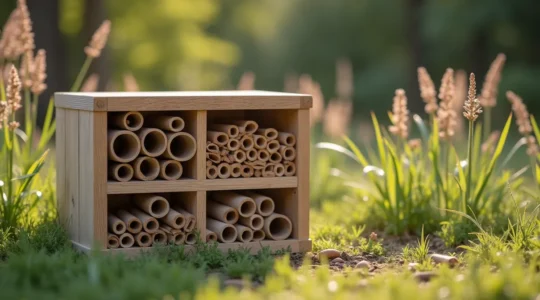
DIY Insect Hotels: How to Build One That Isn’t a Death Trap?
Most DIY insect hotels, despite good intentions, become lethal traps for the very bees they aim to help. Material choice…
Read more
Native Wildflowers or Cultivars: Which Melliferous Species Produce More Nectar?
Maximizing your honey harvest isn’t about planting more flowers—it’s about engineering a high-yield nectar factory by choosing species with proven,…
Read more
Nematodes or Ladybugs: Which Biological Control Saves Lawns From Grubs?
Choosing between nematodes and ladybugs is the wrong question; the real solution is building a resilient lawn ecosystem that manages…
Read more
How to Adopt Organic Horticultural Practices for Higher Vegetable Yields?
Achieving consistently high vegetable yields isn’t about isolated organic ‘tricks’; it’s about systematically managing your soil as a living ecosystem….
Read more
How to Schedule Regular Groundskeeping to Spend Only 1 Hour a Week?
In summary: Adopt a system of preventative micro-tasks instead of reacting to large problems. Focus on high-leverage activities: sharp tools,…
Read more
Beyond Toughness: How to Select Coastal Plants That Truly Thrive in Salt and Wind
Most coastal gardening advice offers a simple list of ‘tough’ plants, yet they still fail. The real secret is to…
Read more
Winter Dormancy for Potted Plants: The No-Greenhouse Logistics Guide
Successfully overwintering potted plants without a greenhouse is a matter of precise environmental control, not just finding a warm spot….
Read more
How to Read Regional Hardiness Zones to Avoid Costly Winter Plant Loss
Many gardeners believe matching a plant’s tag to their USDA Hardiness Zone is a guarantee of survival. This is a…
Read more
How to Perfectly Balance Plant Macronutrients for Explosive Spring Growth
The secret to a thriving garden isn’t just knowing what N-P-K means; it’s understanding that these nutrients work in a…
Read more